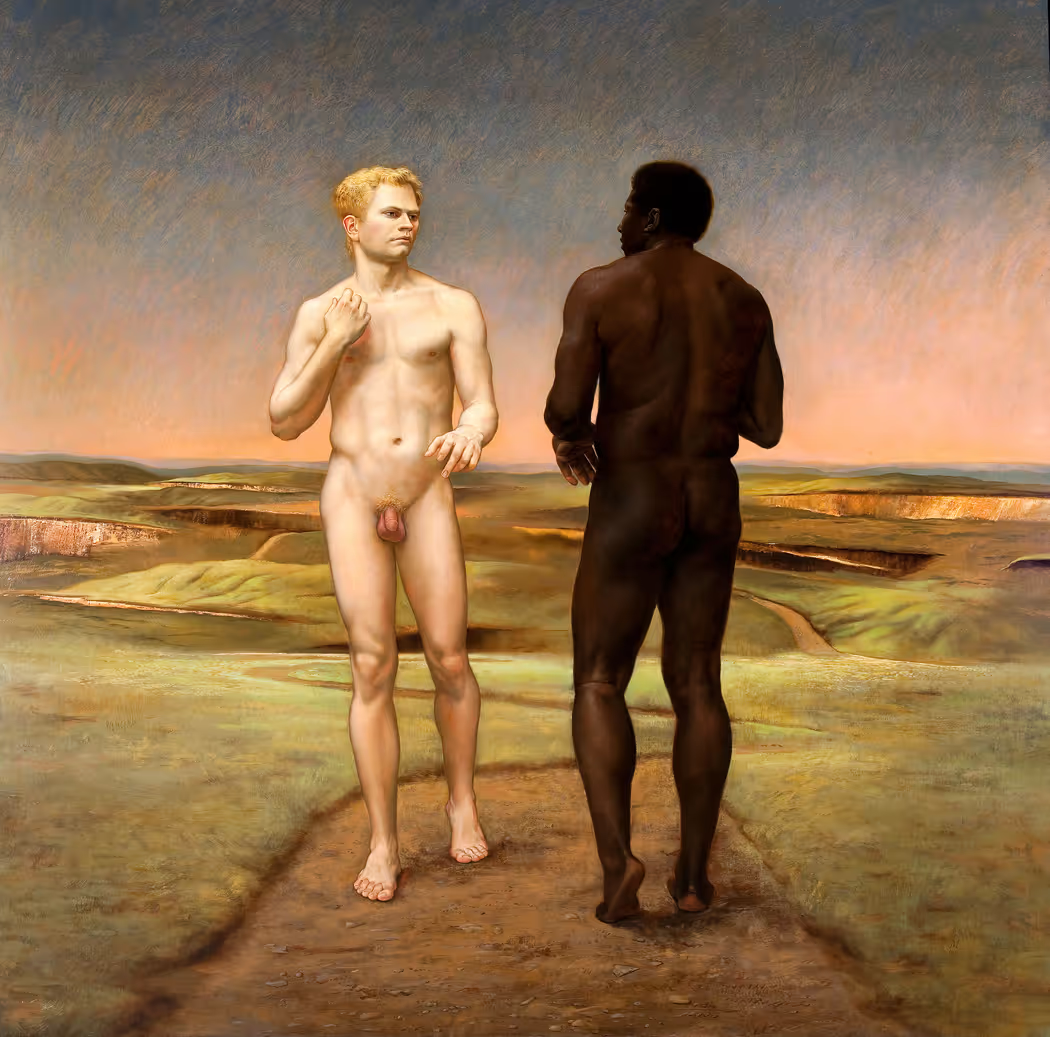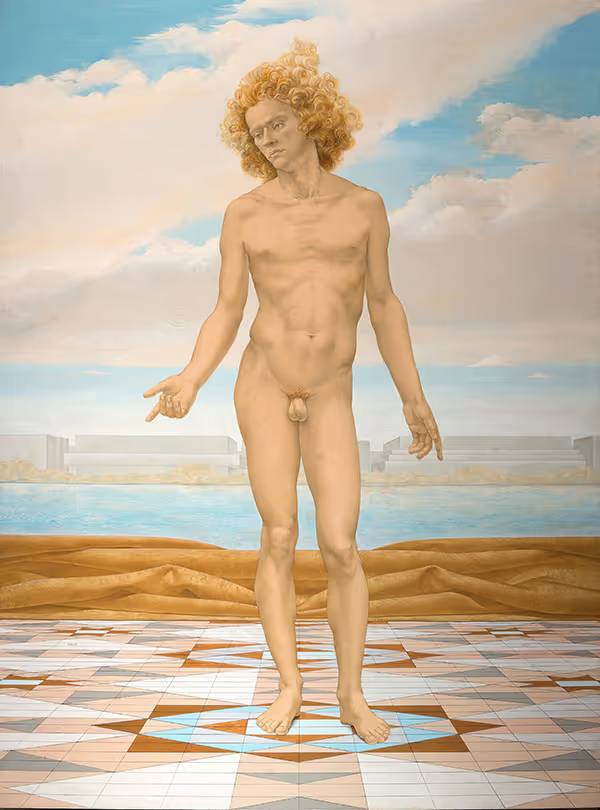
Erlebacher’s Apollo recalls the figure of Venus in Sandro Botticelli’s Renaissance masterpiece The Birth of Venus(1485–86). Apollo, the youthful god of light, beauty, music, truth, and prophecy stands in a contrapposto pose, his blond hair flowing and his pristine body bathed in a silvery, bright light. Like Venus, Apollo embodies what is pure and beautiful in humanity. He stands on a ground of consummately ordered geometry, and the fallen curtain behind him suggests an unveiling or arrival, as if he has been born into the world as a mature being. The low, blocky buildings on the far shore seem to be totems of the modern age, and elicit the question: where is Apollo in our world?
Born in Jersey City, New Jersey, Erlebacher earned a BA in industrial design and an MFA at the Pratt Institute in Brooklyn. She and her husband, Walter Erlebacher, taught at Pratt until 1966, at which time the couple relocated to Philadelphia, each of them having accepted a teaching position at the Philadelphia College of Art (later the University of the Arts). Erlebacher taught at the University of the Arts and later at the New York Academy of Art. Her work has been exhibited nationally and internationally and is in the collections of Woodmere, the Philadelphia Museum of Art, the Pennsylvania Academy of the Fine Arts, the Art Institute of Chicago, the Yale University Art Gallery, the Fogg Museum at Harvard University, the Cleveland Museum of Art, and many others.