sustainability
Woodmere is committed to stewarding our 10 acres of landscape using sustainable best practices. We continue to develop and integrate the experience of outdoor features across our grounds in a manner that brings art in conversation with environmental science and horticultural interest.
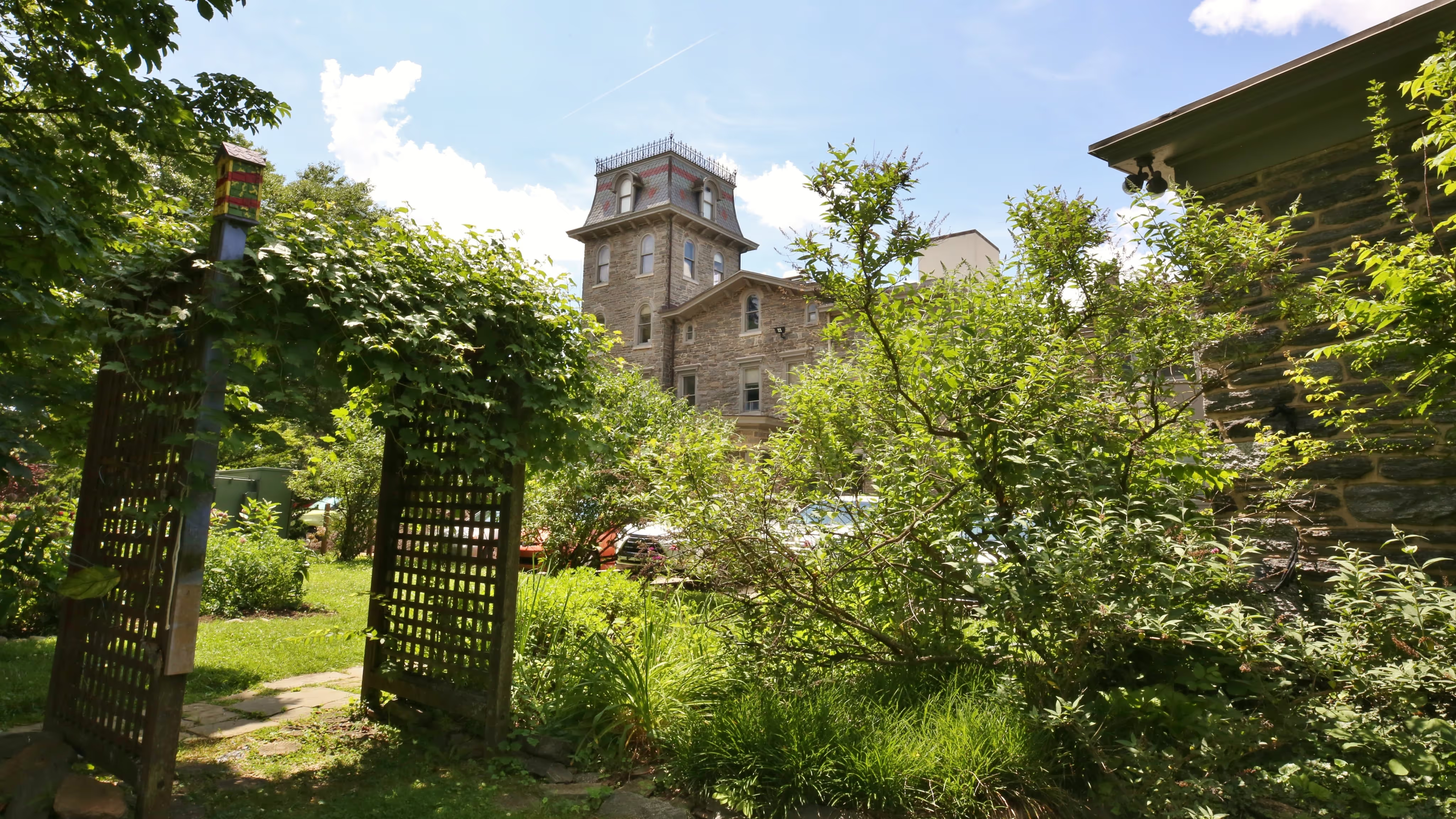
Stormwater Management
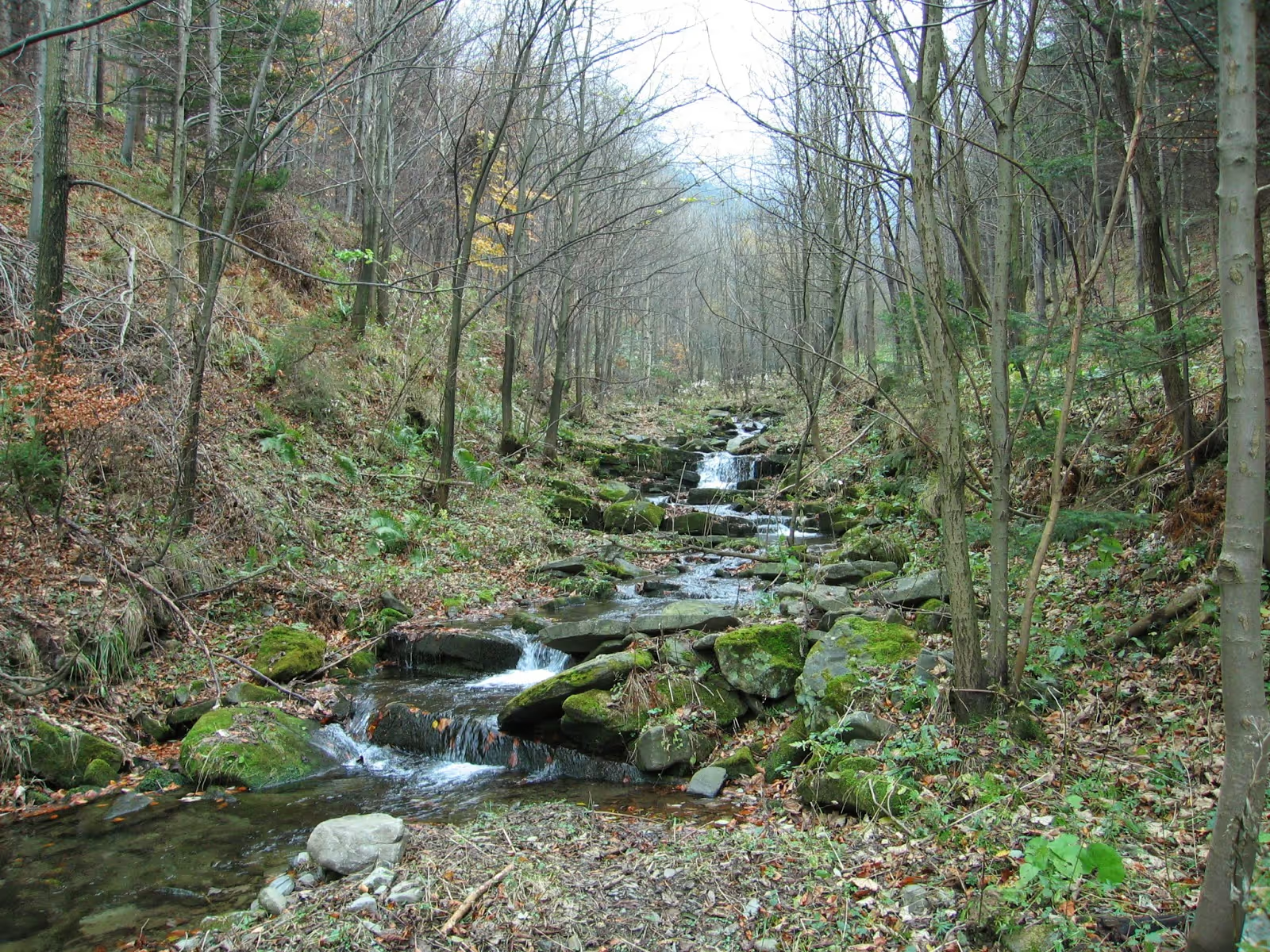
Sustainable stormwater management involves using natural processes and green infrastructure to manage rainwater runoff in an environmentally responsible way. Instead of relying solely on traditional storm drains, this approach integrates solutions like rain gardens, permeable pavements, green roofs, and bioswales to capture, filter, and slow the flow of stormwater. By allowing water to naturally infiltrate into the ground, sustainable stormwater management reduces the risk of flooding, improves water quality by filtering pollutants, and replenishes local groundwater supplies. These methods also help prevent erosion, lower the burden on municipal drainage systems, and reduce the urban heat island effect, contributing to healthier ecosystems and more resilient communities.

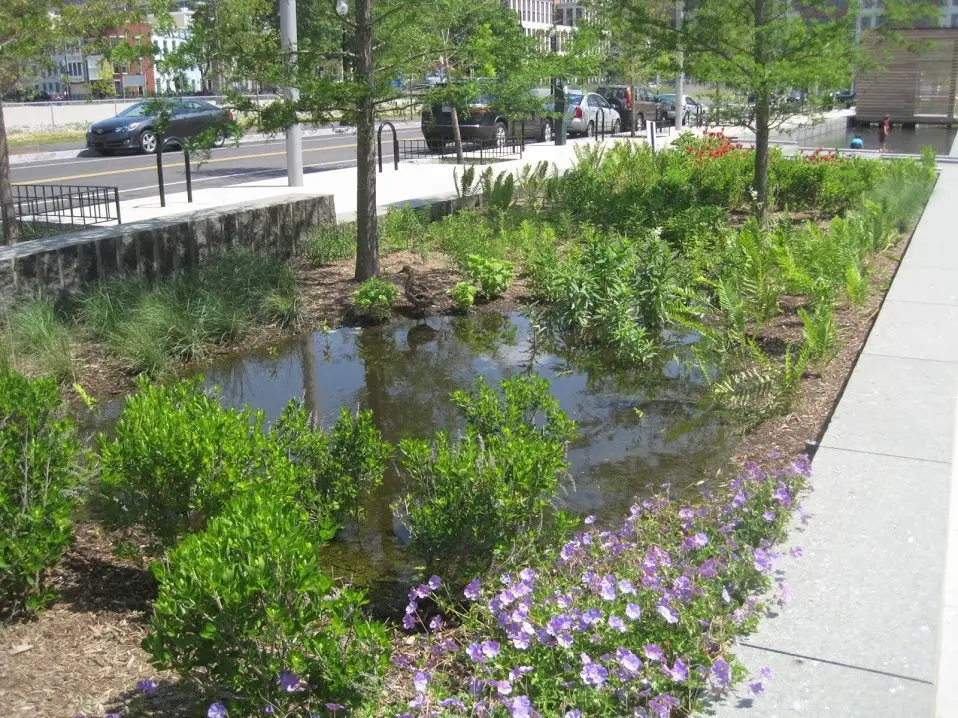
Green Parking Lots
Green parking lots are an environmentally friendly alternative to traditional asphalt parking areas, designed to manage stormwater runoff, reduce heat islands, and improve the overall aesthetic and ecological impact of a space. These parking lots often feature permeable pavements that allow rainwater to filter through and be absorbed into the ground, reducing the strain on drainage systems and promoting groundwater recharge. In addition, green parking lots incorporate landscaping, including native plants and trees, which help absorb carbon, provide shade, and enhance biodiversity. A hallmark tree in some green parking lots is the Princeton American Elm, a resilient and iconic tree known for its graceful canopy and ability to withstand urban conditions. The presence of such trees not only contributes to the environmental benefits of the parking lot but also creates a more inviting, natural space for visitors.
Learn more about the Princeton American Elm and Woodmere’s trees and landscaping:
Hügelkultur & La Cresta
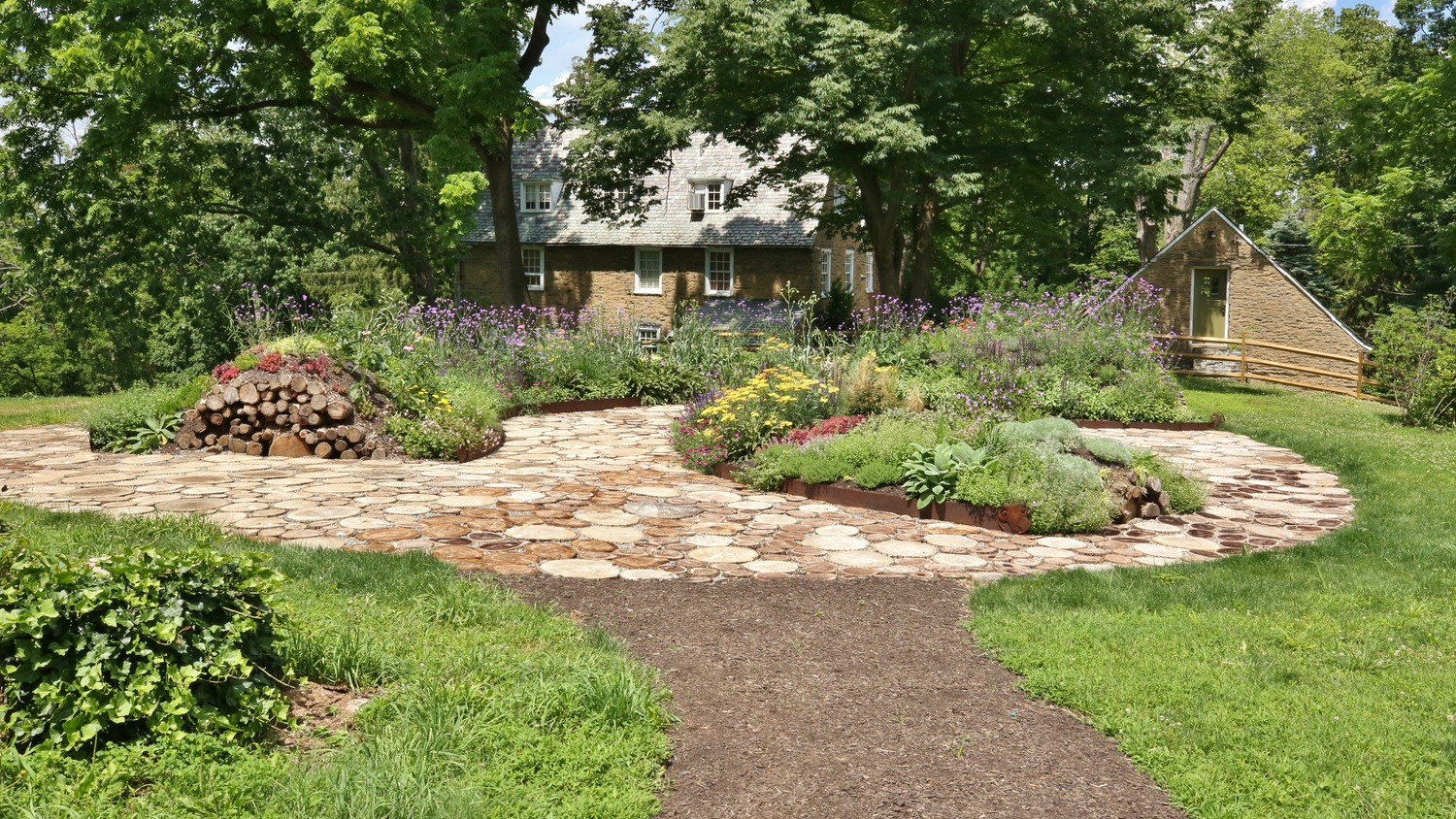
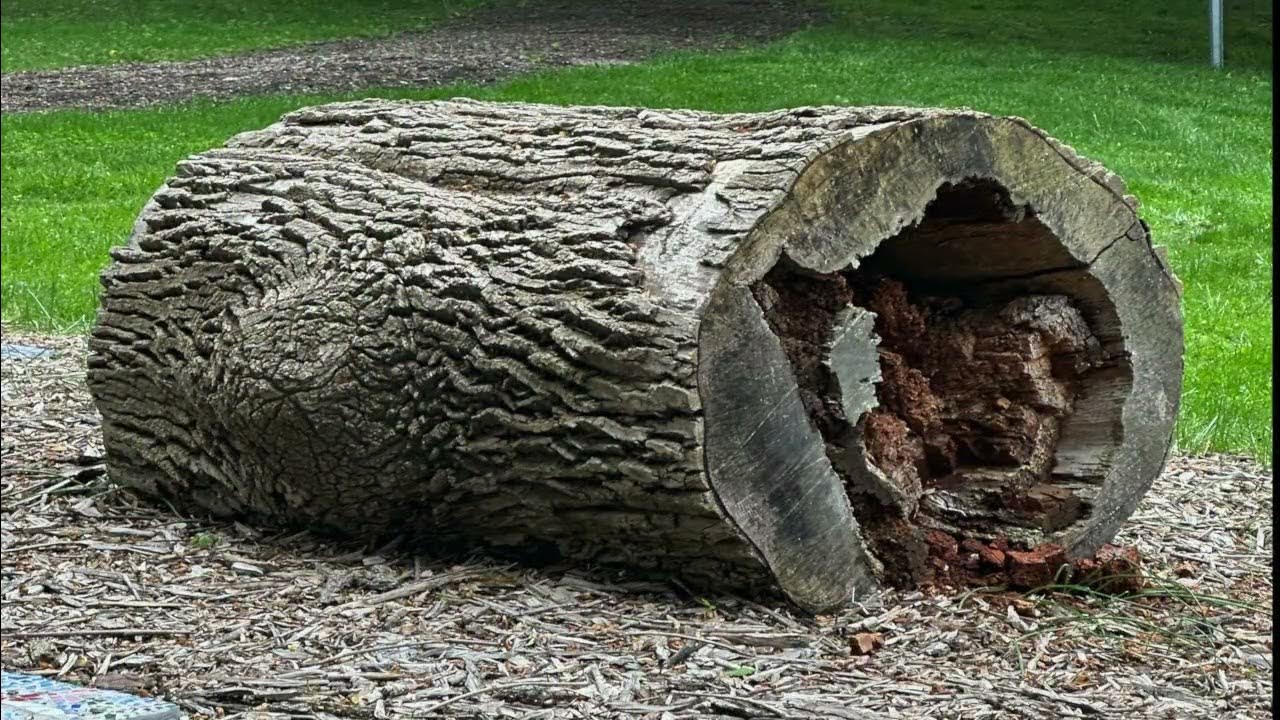
As part of a larger landscape plan, Woodmere’s grounds is a collaboration with Philadelphia artists Syd Carpenter and Steve Donegan. The land-sculpting installation takes inspiration from the horticultural practice of hügelkultur. Visually, La Cresta is comprised of two large organic mounds designed by the artists and inspired in part by the forms of sprouting seed pods. It is a work of art that blurs the line between creativity and horticultural practice.
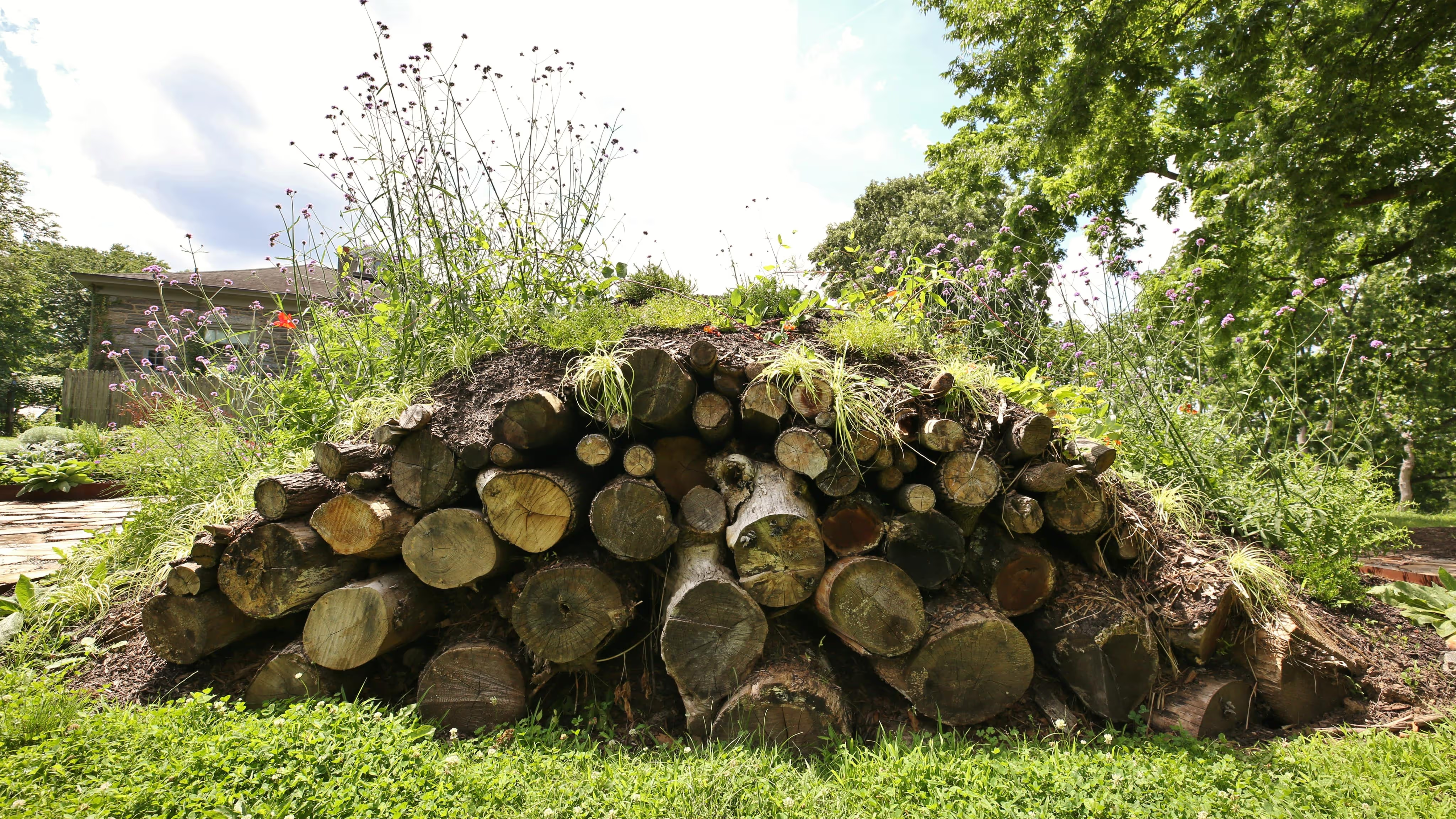
Video Tour: La Cresta and Rot Road
Watch video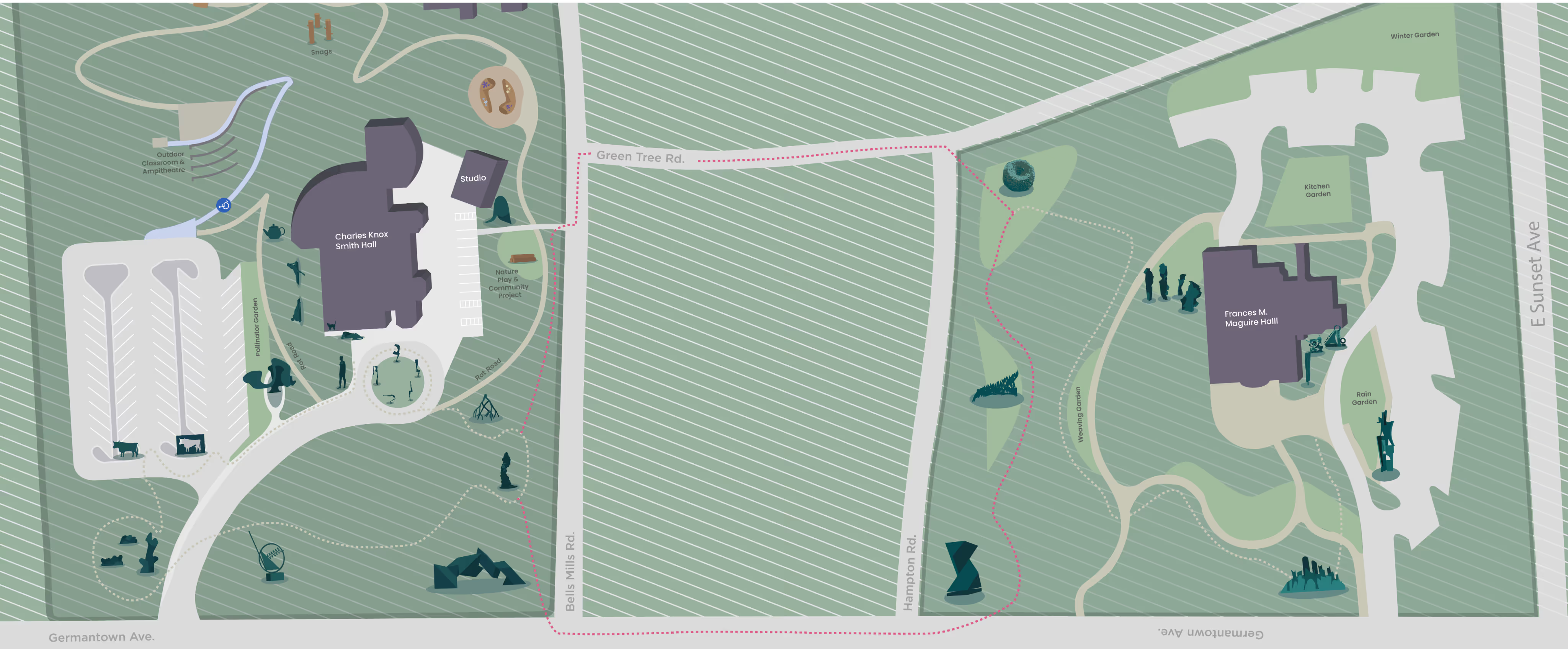
Onsite? Use the WOW interactive map!
Learn more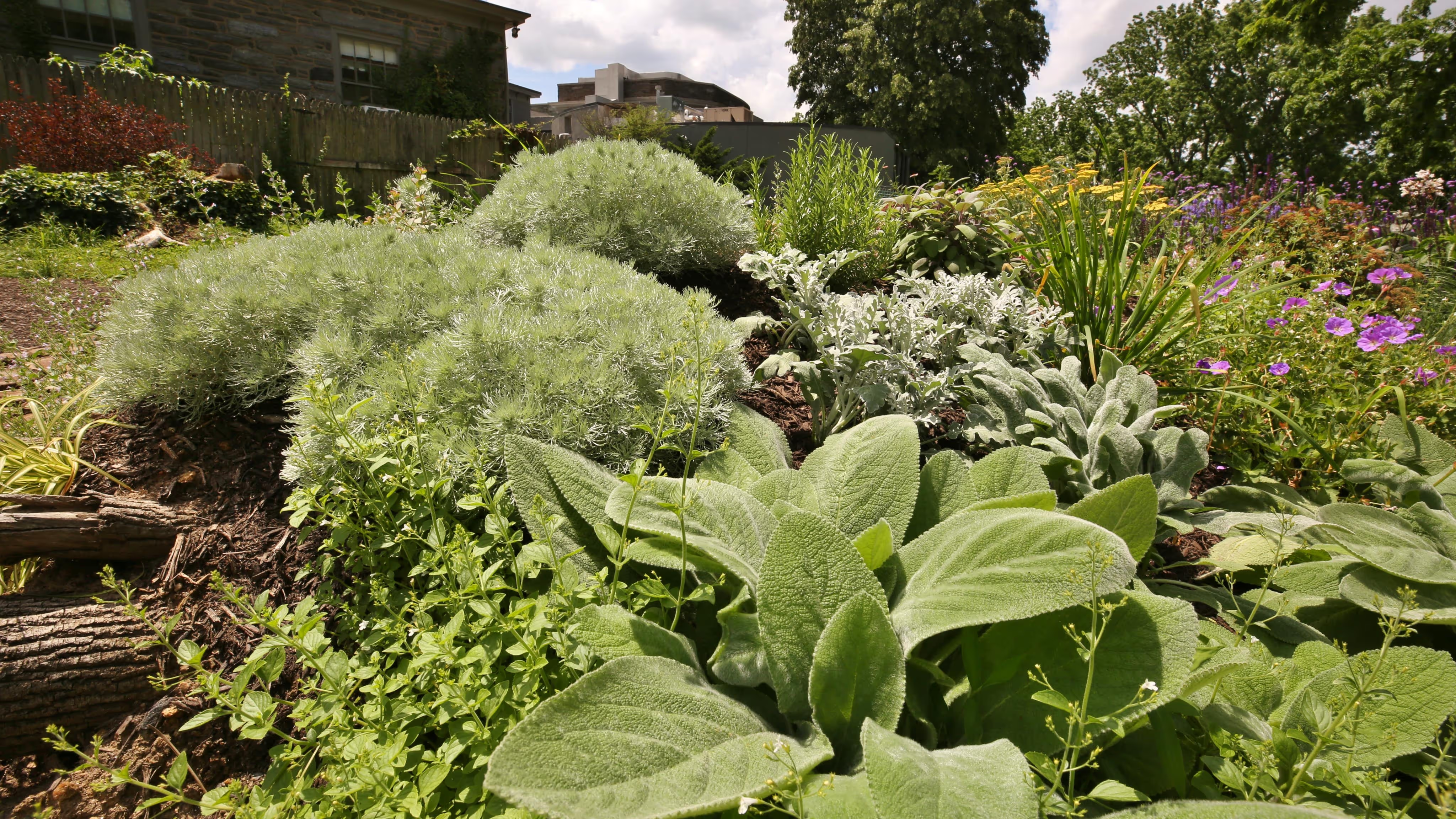
Podcast Episode: Earth Sculpture La Cresta
Listen now