Adult CLASSES & workshops
Our adult art classes offer a creative and supportive environment where participants of all skill levels can explore various artistic techniques, enhance their skills, and develop their artistic voices. Classes are currently being held online and in-person in a variety of mediums and explorations.
.avif)
Please be advised that classes take place in Eastern Standard Time.
Online classes: offered via Zoom. For more information click here.
Registration: available by clicking the REGISTER buttons listed under each class description or by calling 267-691-0725.
Payment Policy: To learn about Woodmere's art class payment policy, click here.
If you have any questions, please reach out to Woodmere’s Education Department by emailing amonroe@woodmereartmuseum.org.
4A | Exploring Abstraction
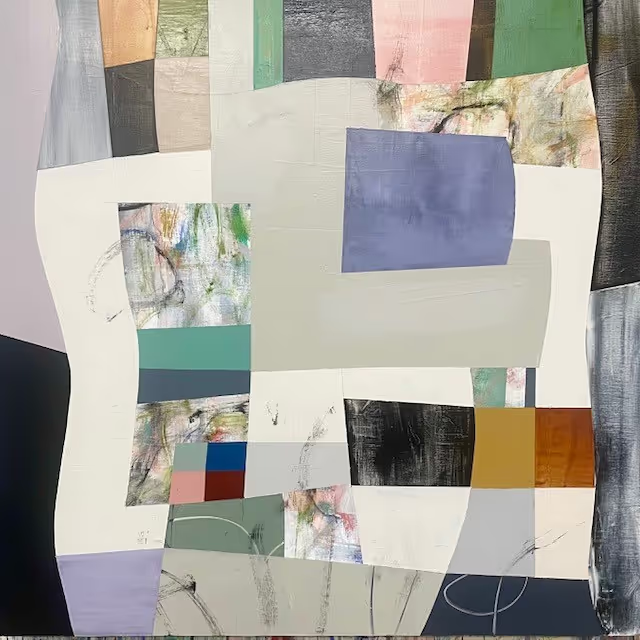
4A | Exploring Abstraction
This class offers a combination of instruction and open studio practice allowing students to explore, take chances, develop critical thinking, and cultivate their artistic voices. Participants investigate basic color theory, learn how to create strong compositions, and develop technical skills. The choice of medium is up to each individual. Supportive individual and group critiques, specific assignments, and demonstrations will encourage students to pursue their personal styles and growth.
Show morePastels: Assorted soft pastels - instructor prefers schmeinke and sennelier, however, it is up to the student to choose. Rembrandt are moderately priced and are good for beginners Paper – instructor prefers Arches 140lb. cold pressed Old toothbrush Acrylics and Oils Painting surface – student’s choice –canvas, board, metal, paper Paints Palette – paper, glass, plexi, paper plate, etc. Brushes, palette knife, and any other implements of student’s choice Painting Mediums – for acrylics, instructor prefers Acrylic Glazing Liquid by Golden; for oils, instructor prefers Windsor Newton Painting Medium; any others can be added depending on desired effect
5A | Botanical Watercolor
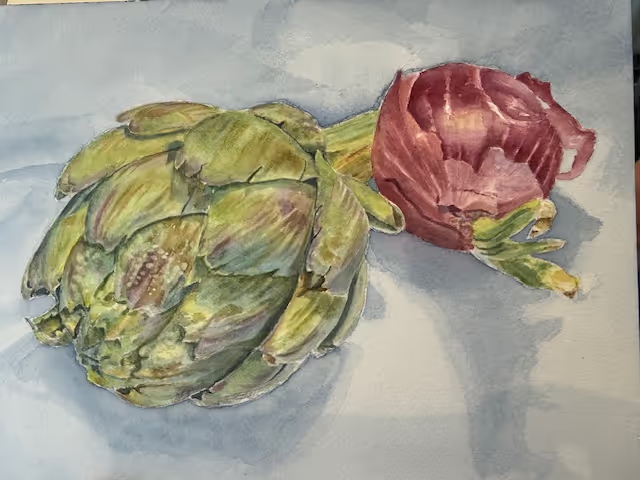
5A | Botanical Watercolor
Learn how to capture the variety of shapes, colors and forms of plants and flowers with the free flow of watercolor. Students will sharpen their observational skills, create interesting compositions, and develop ways of mixing and layering color to encourage self-expression. Demonstrations will be given with plenty of individual attention.
Show moreDrawing paper to begin: 9” x 12” drawing pad (approximate Size) is good Watercolor paper for a longer painting, either 8x10 or 11x14 in size Pencils for drawing: 2B, 4B, 6B, HB Erasers: white erasers Watercolor pencils and a watercolor set Fine watercolor brushes (it is great to have a few very fine and medium brushes)
7A | Portrait Painting and Drawing

7A | Portrait Painting and Drawing
This class will guide students in a process of learning how to achieve a likeness in a portrait drawing and painting. Students will spend time every week on basic exercises to develop fundamental skills and learn how likeness is created through head structure and the relationship of features. Understanding of light and shadow will be emphasized as well as achieving illusions of different textures such as hair, skin and fabrics. The instructor will provide demonstrations in both drawing and painting. Students will also receive individual instruction to help develop their drawings or paintings in class.
Show morePencils, #’s HB, 2B, 4B and 8B Vine Charcoal, Soft Kneaded Eraser Drawing Pad, 12” x 16” or 14” x 18” or equivalent size Oil Paints: Ivory, Black, Indian Red, Yellow Ochre, Cadmium Red, Light Burnt Sienna, Ultramarine Blue, Flake White Medium: Windsor and Newton’s Liquin Mineral Spirits (for washing brushes) Brushes: Bristle brushes; round or filbert: sizes 2, 4, 6, 8, 10; A few small sables or artificial sables Palette: Wooden or strip (paper) palette Canvases: 2 or 3 canvases (board or stretched) sizes 11 x 14”, 16 x 20”, or 18 x 24” Misc. 2 palette cups paper towels or cotton rags
8A | Introduction to Drawing
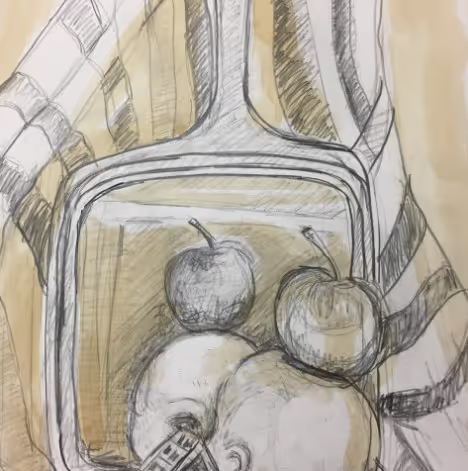
8A | Introduction to Drawing
This class is designed to introduce the essential elements of drawing by working from the landscape and still life setups. Students will experiment with a variety of charcoals and pencils, explore form and space through tone, scale, and color relationships, and create unified drawing compositions. Drawing will take place inside the studio. Students will be inspired by drawings in the Museum’s galleries, in-class demonstrations, and YouTube videos.
Show moreMaterials: Drawing board, Lg. drawing paper, pencil, charcoal, eraser, pen, water soluble pencils Fixative If students would like to experiment with Mixed Media: Pastel set (Rembrandt preferred but not necessary if already have pastels) India Ink small brushes Watercolor pencils Water cup Suggested links for purchasing materials: https://www.dickblick.com/products/richeson-drawing-clip-board/ 23”x26” https://www.dickblick.com/products/blick-studio-charcoal/, one box, medium, one box of soft https://www.dickblick.com/products/blick-studio-drawing-pads/ 18”x24” https://www.dickblick.com/products/blick-all-media-paper/ 15”x22” https://www.dickblick.com/items/faber-castell-goldfaber-sketching-pencil-set-set-of-8/
1A | Studio Oil Painting
1A | Studio Oil Painting
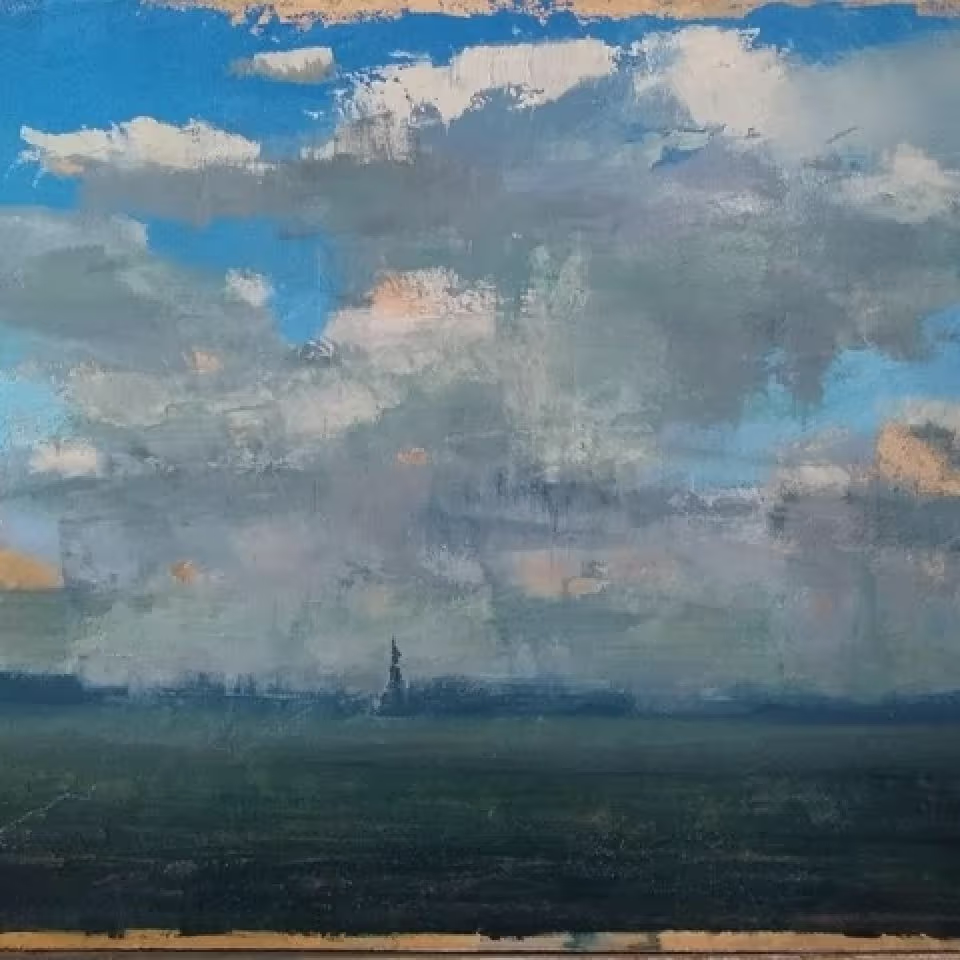
This class is designed to help students execute a painting of their own subject matter and focuses on composition, perspective, color mixing, and painting techniques. Students can use photographs as source material to organize and create a painting and may devote the entire session to one piece or work on multiple pieces. Individual instruction is given during each session.
Show moreOil Colors Yellow: cadmium yellow pale or indian yellow Blue: cerulean blue, ultramarine Red: cadmium red light, alizarin crimson Green: sap green, viridian Earth: raw umber, burnt sienna, yellow ochre or transparent yellow oxide White: titanium Brushes: flat brushes in a variety of sizes; include a few soft, synthetic or sable, a few rounds and at least one 2" or larger soft, flat brush for glazing. Make sure these are not watercolor brushes. Palette knife - flexible, cranked shaft at least 3in long. Palette, wood or paper (toned gray paper is preferable) Linseed oil Turpenoid or odorless paint thinner - NOT TURPENOID NATURAL! Containers for linseed oil and turpenoid Stretched canvas/gessoed panel Paper towels/painting rags If using photos for source material, Students must provide their own photos.
2A | Drawing and Painting I and II
2A | Drawing and Painting I and II
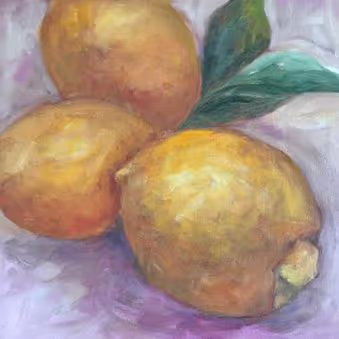
Enjoy painting, drawing or a combination of both. Beginners will be taught how to “see” and not just look. Questions such as “where do I start?” will be answered. Learn what makes an interesting composition, how to shade and give your pictures character and depth. Beginning painters will learn color theory and mixing, how to handle paint, composition and basic techniques. More advanced students will continue to hone their skills through a combination of painting from real life as well as the classic method of artistic learning: copying from other artworks and photographs. Demonstrations and individual instruction will be given to each student. Progress at your own pace in a relaxed atmosphere.
Show moreIf you are drawing, 12” x 16” drawing pad (approximate Size) NOT Newsprint 4 pencils: 2B, 4B, 6B, HB Kneaded eraser For Painting: Disposable palette pad Canvas pad (approximately 12 x 15”), OR two small canvases: Make sure the canvas pad says " REAL " canvas Paper Towels (Bounty is good) 1 Can (for water or turpenoid) 1 Can turpenoid only. NOT Turpentine. Brushes – sizes 4, 6, 8 to begin Oil Paint Colors: White, Black, Cadmium Red Light, Cadmium Yellow, French Ultramarine Blue, Raw Umber, Yellow Ochre, Alizarin Crimson, Burnt Sienna.
3A | Introduction to Oil Painting and Beyond
3A | Introduction to Oil Painting and Beyond
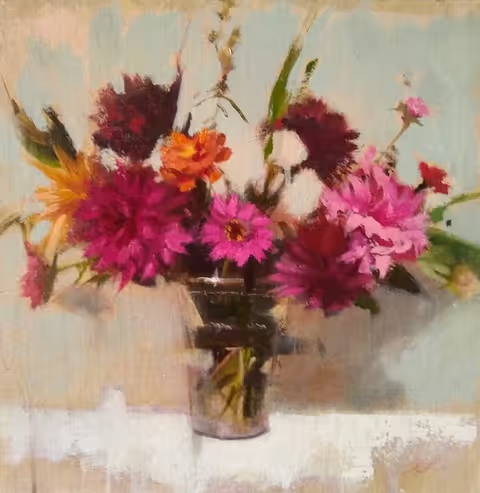
This class is for students who want to learn the basics of oil painting and for those who are already familiar with the medium and want to improve their skill level. The topics covered will be composing a picture, observing color relationships, mixing color, and application of paint. There will be lots of hands-on help in a relaxed and nurturing environment.
Show moreOil Colors Yellow: cadmium yellow pale or indian yellow Blue: cerulean blue, ultramarine Red: cadmium red light, alizarin crimson Green: sap green, viridian Earth: raw umber, burnt sienna, yellow ochre or transparent yellow oxide White: titanium Brushes: flat brushes in a variety of sizes; include a few soft, synthetic or sable, a few rounds and at least one 2" or larger soft, flat brush for glazing. Make sure these are not watercolor brushes. Palette knife - flexible, cranked shaft at least 3in long. Palette, wood or paper (toned gray paper is preferable) Linseed oil Turpenoid or odorless paint thinner - NOT TURPENOID NATURAL! Containers for linseed oil and turpenoid Stretched canvas/gessoed panel Paper towels/painting rags If using photos for source material, Students must provide their own photos.
W3 | Make a Felted Eyeglass Case
W3 | Make a Felted Eyeglass Case
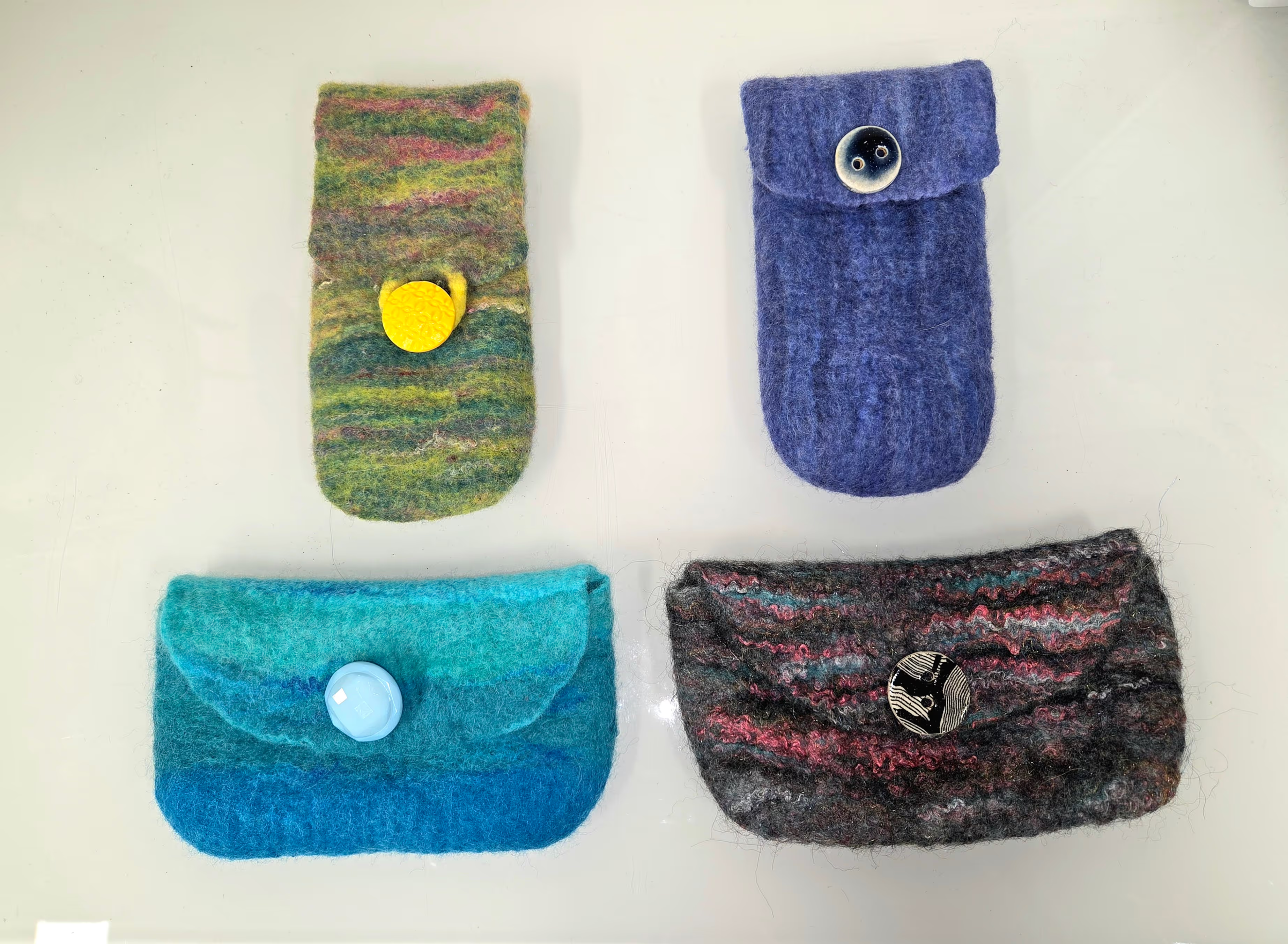
Offered in partnership with Mount Airy Learning Tree Keep your eyeglasses safe and happy in your own handmade glasses case! You'll learn the basics of wet felting from fibers to finish. Art is therapy, and felting is contagious! You will have fun, get funky with fibers, and work with your hands to create something new.
Show moreStudents are responsible for the following and must bring to class: small buckets for water, two towels, scissors, a small container of dish soap, a tape measure, and 6 to 8oz. of Merino or Corriedale roving (loose fiber), which can be purchased on Livingfelt.com, Etsy or some yarn stores, OR DIRECTLY FROM THE TEACHER FOR $25 PER PERSON, which must be indicated upon registration. Please DO NOT use any fibers that are not specific about the breed of wool (ie, Merino or Corriedale). Generally, fibers purchased from hobby stores are NOT good for wet felting. There is a $5 materials fee for bubble wrap and resist material payable to the teacher at class for all participants. Please note that the process of felting is physical and requires the use of hands, arms and fingers.
W4 | Health and Wellness: Five Elements Qigong Practice
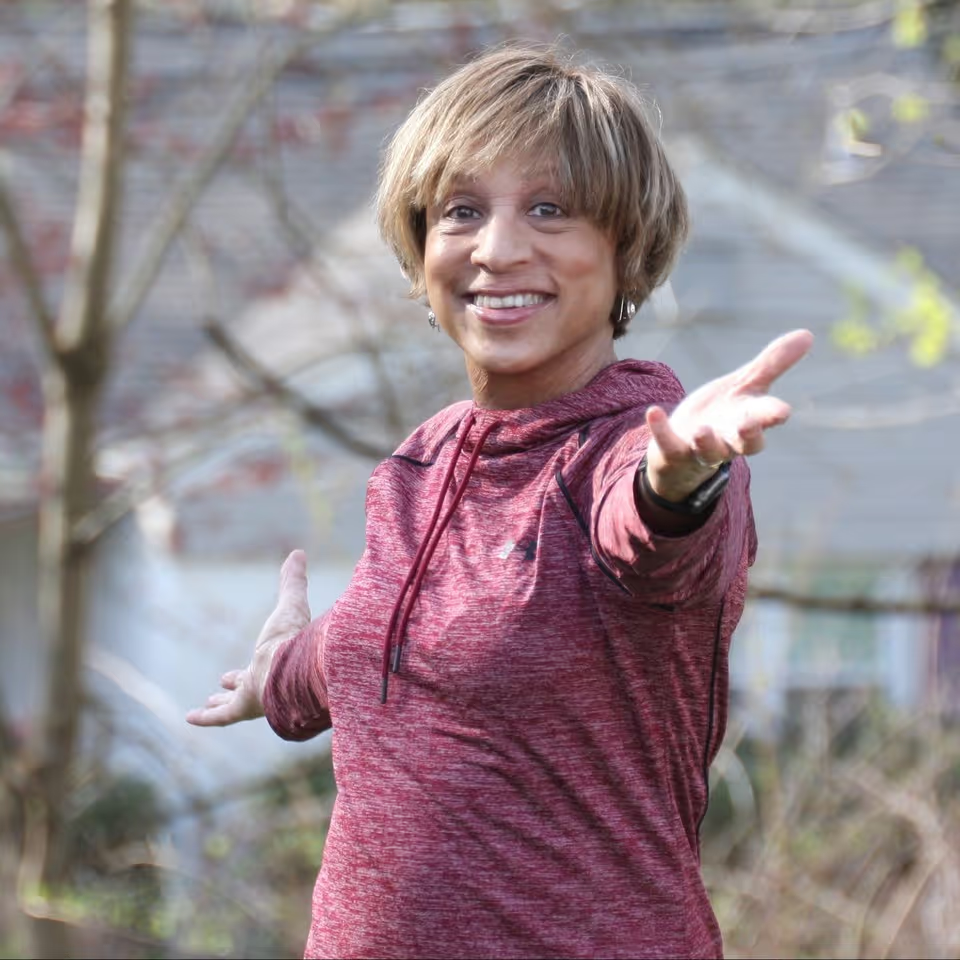
W4 | Health and Wellness: Five Elements Qigong Practice
Feeling stressed and tired? Ready for some genuine self-care? Join Kelly McLeod for this energizing 6-week Qigong series! Discover how these ancient Chinese practices, (Qi (pronounced “chee”) meaning energy, and Gong, meaning to work with), can transform your energy, calm your mind, and restore your body's natural vitality. Each session blends breathing techniques, warmups, stretching, followed by gentle flowing movements and brief meditation that work together to create balance in your entire system. No experience needed! All exercises can be done standing or seated and Kelly will guide you every step of the way. (Chairs will be provided.) Whether you're curious about Qigong or looking to deepen your practice, this series offers the perfect blend of tradition and accessibility.
Show moreRegisterW5 | Create Traditional African Batik & Adire Textiles
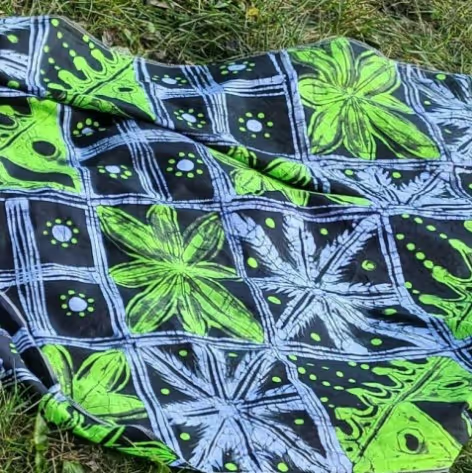
W5 | Create Traditional African Batik & Adire Textiles
Offered in partnership with Mount Airy Learning Tree Take a creative journey into the world of batik and adire (tie and dye) textile-making. Drawing inspiration from his Yoruba roots and Nigerian heritage, Muyiwa, an expert in the field, will guide you through the process of using wax and dye to create intricate patterns and motifs. You will start by applying hot wax to 100% cotton fabrics to create patterns, then immerse them in vibrant dyes. Finally, we'll carefully remove the wax, revealing beautiful, colorful designs. Discover the influence of African culture as you explore the vibrant world of African textiles that hold deep cultural significance. You may infuse your designs with your unique voice, or use African patterns to create beautiful cotton fabric or a cotton shirt. By the end of the class, you'll have crafted textiles that reflect the beauty and essence of African traditions.
Show moreRegisterW6 | Botanical Alchemy: Mandala Banners with Nature
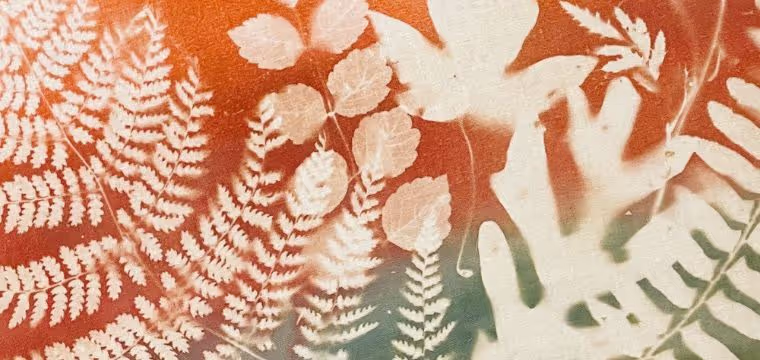
W6 | Botanical Alchemy: Mandala Banners with Nature
Offered in partnership with Mount Airy Learning Tree Step into the magic of the natural world through Botanical Alchemy. In this relaxing, sensory-rich workshop, students will create a nature mandala on a cotton banner using hand-dyed fabric and seasonal botanicals. We'll explore color, composition, and intuitive design as we work with plants to make something meaningful. You'll leave with a one-of-a-kind hanging artwork and a renewed sense of connection to nature, and yourself. All materials provided, but students are welcome to bring personal botanicals to infuse their story into the piece.
Show more$20 supplies fee made payable to the instructor
1B | Studio Oil Painting
1B | Studio Oil Painting
This class is designed to help students execute a painting of their own subject matter and focuses on composition, perspective, color mixing, and painting techniques. Students can use photographs as source material to organize and create a painting and may devote the entire session to one piece or work on multiple pieces. Individual instruction is given during each session.
Show moreOil Colors Yellow: cadmium yellow pale or indian yellow Blue: cerulean blue, ultramarine Red: cadmium red light, alizarin crimson Green: sap green, viridian Earth: raw umber, burnt sienna, yellow ochre or transparent yellow oxide White: titanium Brushes: flat brushes in a variety of sizes; include a few soft, synthetic or sable, a few rounds and at least one 2" or larger soft, flat brush for glazing. Make sure these are not watercolor brushes. Palette knife - flexible, cranked shaft at least 3in long. Palette, wood or paper (toned gray paper is preferable) Linseed oil Turpenoid or odorless paint thinner - NOT TURPENOID NATURAL! Containers for linseed oil and turpenoid Stretched canvas/gessoed panel Paper towels/painting rags If using photos for source material, Students must provide their own photos.
4B | Exploring Abstraction
4B | Exploring Abstraction
This class offers a combination of instruction and open studio practice allowing students to explore, take chances, develop critical thinking, and cultivate their artistic voices. Participants investigate basic color theory, learn how to create strong compositions, and develop technical skills. The choice of medium is up to each individual. Supportive individual and group critiques, specific assignments, and demonstrations will encourage students to pursue their personal styles and growth.
Show morePastels: Assorted soft pastels - instructor prefers schmeinke and sennelier, however, it is up to the student to choose. Rembrandt are moderately priced and are good for beginners Paper – instructor prefers Arches 140lb. cold pressed Old toothbrush Acrylics and Oils Painting surface – student’s choice –canvas, board, metal, paper Paints Palette – paper, glass, plexi, paper plate, etc. Brushes, palette knife, and any other implements of student’s choice Painting Mediums – for acrylics, instructor prefers Acrylic Glazing Liquid by Golden; for oils, instructor prefers Windsor Newton Painting Medium; any others can be added depending on desired effect
5B | Botanical Watercolor
5B | Botanical Watercolor
Learn how to capture the variety of shapes, colors and forms of plants and flowers with the free flow of watercolor. Students will sharpen their observational skills, create interesting compositions, and develop ways of mixing and layering color to encourage self-expression. Demonstrations will be given with plenty of individual attention.
Show moreDrawing paper to begin: 9” x 12” drawing pad (approximate Size) is good Watercolor paper for a longer painting, either 8x10 or 11x14 in size Pencils for drawing: 2B, 4B, 6B, HB Erasers: white erasers Watercolor pencils and a watercolor set Fine watercolor brushes (it is great to have a few very fine and medium brushes)
7B | Portrait Painting and Drawing
7B | Portrait Painting and Drawing
This class will guide students in a process of learning how to achieve a likeness in a portrait drawing and painting. Students will spend time every week on basic exercises to develop fundamental skills and learn how likeness is created through head structure and the relationship of features. Understanding of light and shadow will be emphasized as well as achieving illusions of different textures such as hair, skin and fabrics. The instructor will provide demonstrations in both drawing and painting. Students will also receive individual instruction to help develop their drawings or paintings in class.
Show morePencils, #’s HB, 2B, 4B and 8B Vine Charcoal, Soft Kneaded Eraser Drawing Pad, 12” x 16” or 14” x 18” or equivalent size Oil Paints: Ivory, Black, Indian Red, Yellow Ochre, Cadmium Red, Light Burnt Sienna, Ultramarine Blue, Flake White Medium: Windsor and Newton’s Liquin Mineral Spirits (for washing brushes) Brushes: Bristle brushes; round or filbert: sizes 2, 4, 6, 8, 10; A few small sables or artificial sables Palette: Wooden or strip (paper) palette Canvases: 2 or 3 canvases (board or stretched) sizes 11 x 14”, 16 x 20”, or 18 x 24” Misc. 2 palette cups paper towels or cotton rags
8B | Introduction to Drawing
8B | Introduction to Drawing
This class is designed to introduce the essential elements of drawing by working from the landscape and still life setups. Students will experiment with a variety of charcoals and pencils and explore form and space through tone, scale, and color relationships to create unified drawing compositions. Drawing will take place inside the studio. Students will be inspired by drawings in the Museum’s galleries, in-class demonstrations, and YouTube videos.
Show moreMaterials: Drawing board, Lg. drawing paper, pencil, charcoal, eraser, pen, water soluble pencils Fixative If students would like to experiment with Mixed Media: Pastel set (Rembrandt preferred but not necessary if already have pastels) India Ink small brushes Watercolor pencils Water cup Suggested links for purchasing materials: https://www.dickblick.com/products/richeson-drawing-clip-board/ 23”x26” https://www.dickblick.com/products/blick-studio-charcoal/, one box, medium, one box of soft https://www.dickblick.com/products/blick-studio-drawing-pads/ 18”x24” https://www.dickblick.com/products/blick-all-media-paper/ 15”x22” https://www.dickblick.com/items/faber-castell-goldfaber-sketching-pencil-set-set-of-8/
2B | Drawing and Painting I and II
2B | Drawing and Painting I and II
Enjoy painting, drawing or a combination of both. Beginners will be taught how to “see” and not just look. Questions such as “where do I start?” will be answered. Learn what makes an interesting composition, how to shade and give your pictures character and depth. Beginning painters will learn color theory and mixing, how to handle paint, composition and basic techniques. More advanced students will continue to hone their skills through a combination of painting from real life as well as the classic method of artistic learning: copying from other artworks and photographs. Demonstrations and individual instruction will be given to each student. Progress at your own pace in a relaxed atmosphere.
Show moreIf you are drawing, 12” x 16” drawing pad (approximate Size) NOT Newsprint 4 pencils: 2B, 4B, 6B, HB Kneaded eraser For Painting: Disposable palette pad Canvas pad (approximately 12 x 15”), OR two small canvases: Make sure the canvas pad says " REAL " canvas Paper Towels (Bounty is good) 1 Can (for water or turpenoid) 1 Can turpenoid only. NOT Turpentine. Brushes – sizes 4, 6, 8 to begin Oil Paint Colors: White, Black, Cadmium Red Light, Cadmium Yellow, French Ultramarine Blue, Raw Umber, Yellow Ochre, Alizarin Crimson, Burnt Sienna.
3B | Introduction to Oil Painting and Beyond
3B | Introduction to Oil Painting and Beyond
This class is for students who want to learn the basics of oil painting and for those who are already familiar with the medium and want to improve their skill level. The topics covered will be composing a picture, observing color relationships, mixing color, and application of paint. There will be lots of hands-on help in a relaxed and nurturing environment.
Show moreOil Colors Yellow: cadmium yellow pale or indian yellow Blue: cerulean blue, ultramarine Red: cadmium red light, alizarin crimson Green: sap green, viridian Earth: raw umber, burnt sienna, yellow ochre or transparent yellow oxide White: titanium Brushes: flat brushes in a variety of sizes; include a few soft, synthetic or sable, a few rounds and at least one 2" or larger soft, flat brush for glazing. Make sure these are not watercolor brushes. Palette knife - flexible, cranked shaft at least 3in long. Palette, wood or paper (toned gray paper is preferable) Linseed oil Turpenoid or odorless paint thinner - NOT TURPENOID NATURAL! Containers for linseed oil and turpenoid Stretched canvas/gessoed panel Paper towels/painting rags If using photos for source material, Students must provide their own photos.
W7 | Oil Painting for Beginners
.avif)
W7 | Oil Painting for Beginners
Have you ever wanted to try oil painting? This class will introduce students to mixing mediums, mixing a palette, under painting and all related materials. Each student will complete an 8x10 canvas from a still life composition. Bring your paint set and find out how to use it!
Show more$10 materials fee made payable to the instructor Palette Paper Palette Knife Linseed Oil Liquin 8x10 canvas Starter oil paint set Turpenoid Gamsol Brushes Containers (small mustard or baby food jars)
6B | Look Both Ways: The Interconnection Between Representation and Abstraction (Online, via Zoom)
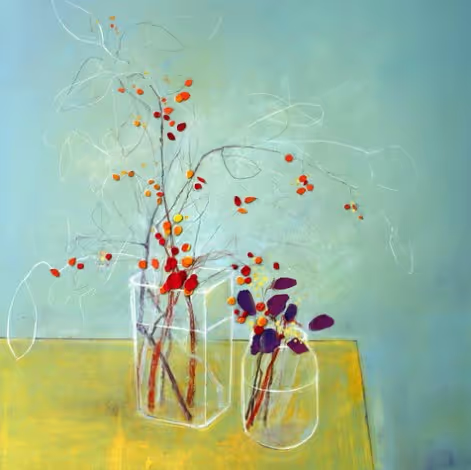
6B | Look Both Ways: The Interconnection Between Representation and Abstraction (Online, via Zoom)
Explore subject matter in a new way! Whether you are drawn to realism or abstraction, this class will demonstrate the interconnection between both. A special focus on lesser known but exquisite artists will inspire new ways to experiment with the expressive qualities of line, form, color and light, and texture. Work in the medium of your choice (acrylic, oil, watercolor, pastel, fabric, and drawing mediums). This class includes group and individual critiques, discussions of selected artist's work and life, and studio time. Demonstrations will be based on students' interests.
Show morePlease have ideas for the paintings you want to make. E.g. Sketch book Photographs Still life setups in your studio Supplies: All students may want a notebook to record ideas/thoughts from demonstrations and discussions. Experienced students can utilize the medium and materials you typically use. Beginning students may want to work in watercolor or drawing materials: For Watercolor may want Brushes. Some student grade round (size 2, 4, and/or 6) and flat (one stroke, size 1/4, 1/2 or 3/4”) watercolor brushes are a good way to start. Usually synthetic. Winsor & Newton Cotman brushes are one brand that works well. Filberts and other brushes/sizes can be added as needed. Paper. Canson Watercolor Pads Cold Press work well. 11X15 or 7X10” and 9X12” wire bound. Paint. Tube paint Winsor & Newton Cotman student grade are economical. Cotman has a set of 6 tubes of varying colors or tubes can be purchased individually. Artist grade paints are more expensive but have more pigment and intensity. Winsor & Newton, Sennelier, Schmincke Horadam are good brands. Pan paint. Crayola Educational watercolor pans work suprising well and are very economical. Winsor & Newton, Sennelier are both good brands. Cotman is the student grade brand of Winsor & Newton. Palette or freezer paper to layout paint. - Plastic or tin containers for water. Old butter, yogurt, or tuna fish cans work well. Board to mount paper. Foam core board or hardboard panels work well. Good sizes include 11X14” or 14X18” depending on your paper. Pencil and kneaded eraser. Paper towel Artist tape to adhere paper to your board. -Caran d'Ache Neocolor II Artists' Crayons (make sure they are the water-soluble not wax crayons) These are fun but not necessary. For Drawing, students may want: Pencils (various hardnesses HB, 2B,4B,6B) Colored pencils can be fun. Watercolor pencils add a new dimension. Pens. Micron is one type that makes an interesting line. Kneaded eraser. Paper. Any paper with a weight greater than 90 lb works. (watercolor, drawing ) 140 lb is a good weight if you plan on using water based medium. Board to mount paper. Foam core board works well. Artist tape to adhere paper to your board. Sketchbooks are a nice alternative and don’t require a board or tape to mount paper. -Caran d'Ache Neocolor II Artists' Crayons (make sure they are the water-soluble not wax crayons) These are fun but not necessary. Supplies can be purchased from: www.dickblick.com www.jerryartarama.com
W9 | Create Traditional African Batik & Adire Textiles
W9 | Create Traditional African Batik & Adire Textiles
Offered in partnership with Mount Airy Learning Tree Take a creative journey into the world of batik and adire (tie and dye) textile-making. Drawing inspiration from his Yoruba roots and Nigerian heritage, Muyiwa, an expert in the field, will guide you through the process of using wax and dye to create intricate patterns and motifs. You will start by applying hot wax to 100% cotton fabrics to create patterns, then immerse them in vibrant dyes. Finally, we'll carefully remove the wax, revealing beautiful, colorful designs. Discover the influence of African culture as you explore the vibrant world of African textiles that hold deep cultural significance. You may infuse your designs with your unique voice, or use African patterns to create beautiful cotton fabric or a cotton shirt. By the end of the class, you'll have crafted textiles that reflect the beauty and essence of African traditions.
Show moreRegister