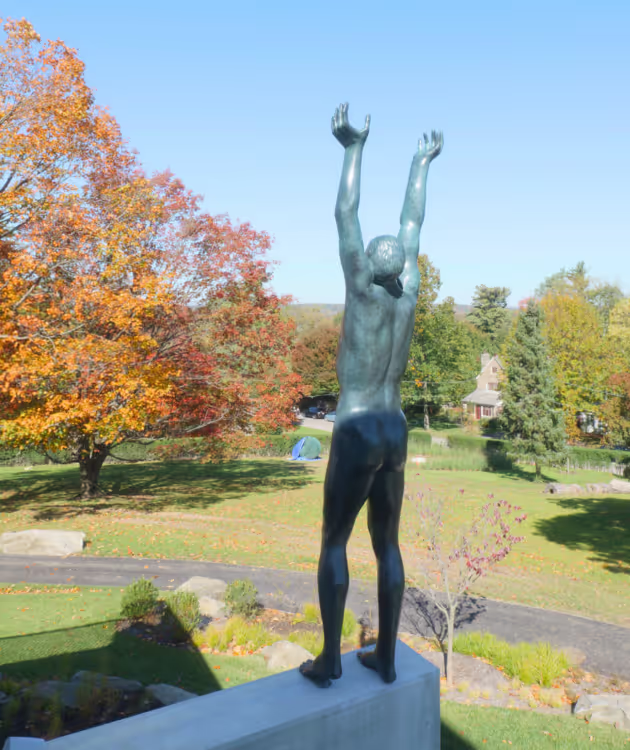
Aspiration reaches skyward, as if beseeching the heavens and asking existential, spiritual questions. The nude figure, which is stylized with smooth, idealized features, represents the innocent beauty with which humanity is born.
Hoffman had served the US in WWII as a young man in his twenties. In that context, the sculpture can be interpreted as a plea for answers to the incomprehensible violence he had experienced.
Hoffman was a Philadelphia-born sculptor who studied at the Pennsylvania Academy of the Fine Arts on the GI Bill. His great mentor was Walker Hancock, a leading American sculptor who led PAFA’s sculpture department, having himself served as a “monument man” in WWII, rescuing works of art that had been plundered by the Third Reich. Aspiration may be inspired by Hancock’s most famous sculpture, the Pennsylvania Railroad War Memorial (1950) in Philadelphia's 30th Street Station, which is a similarly upward-reaching composition and a work of art that responds to WWII.