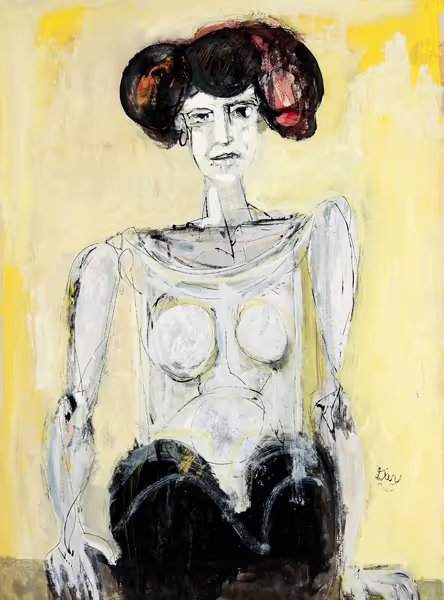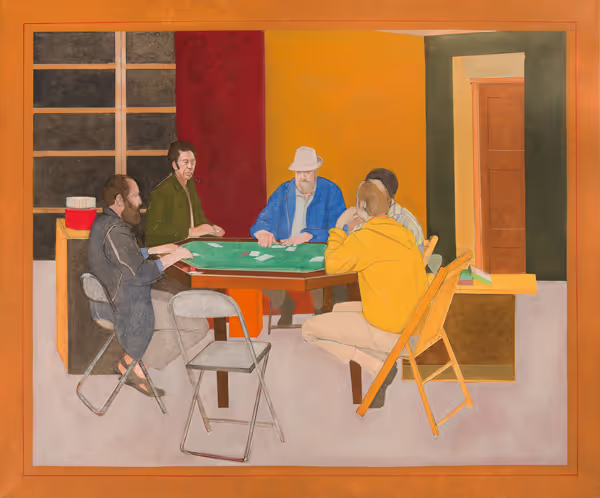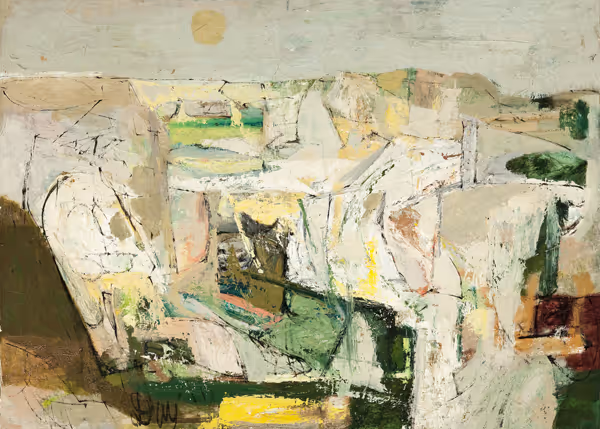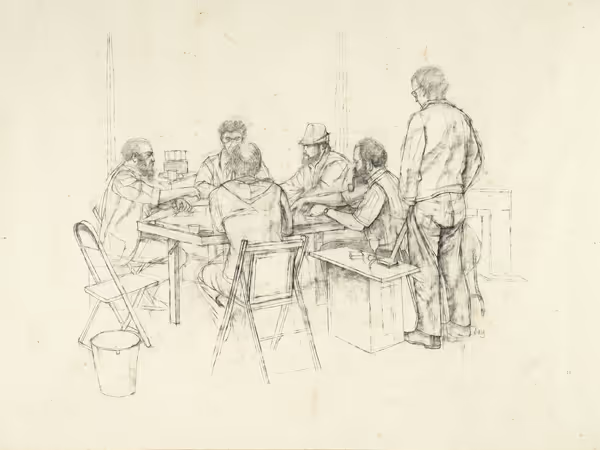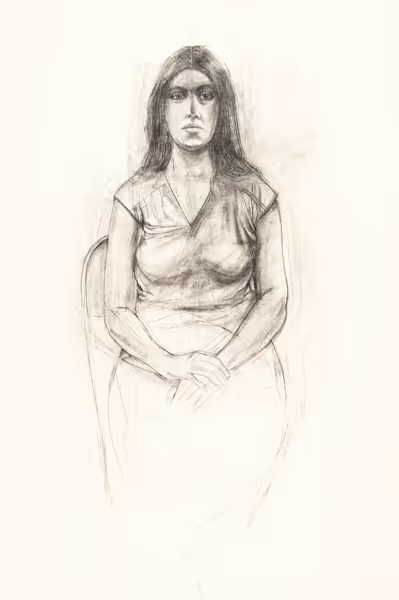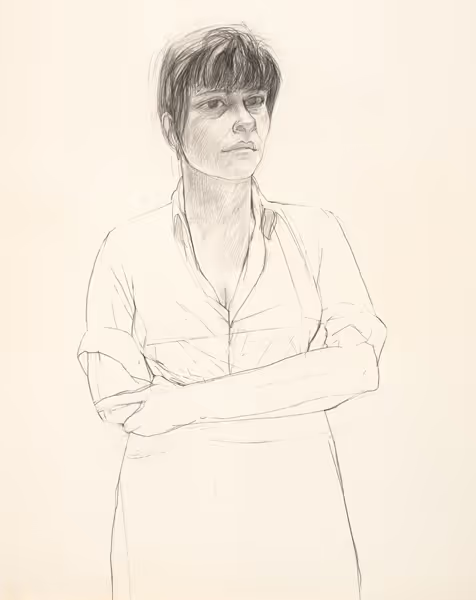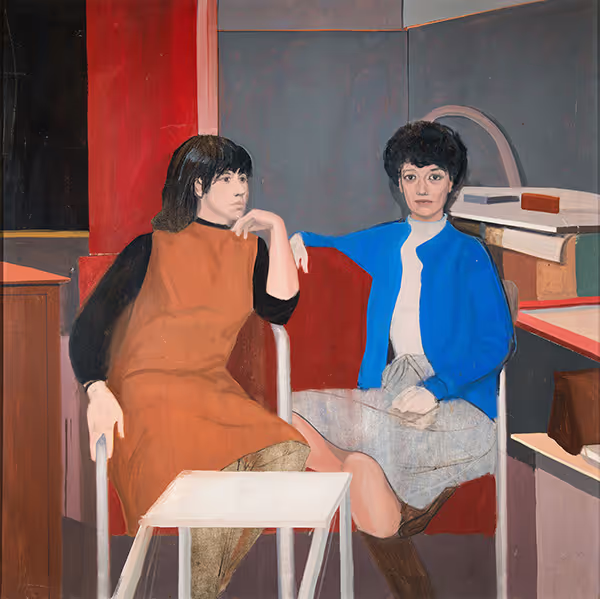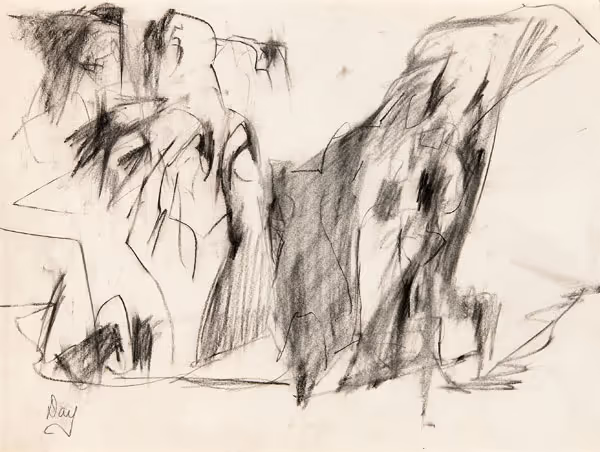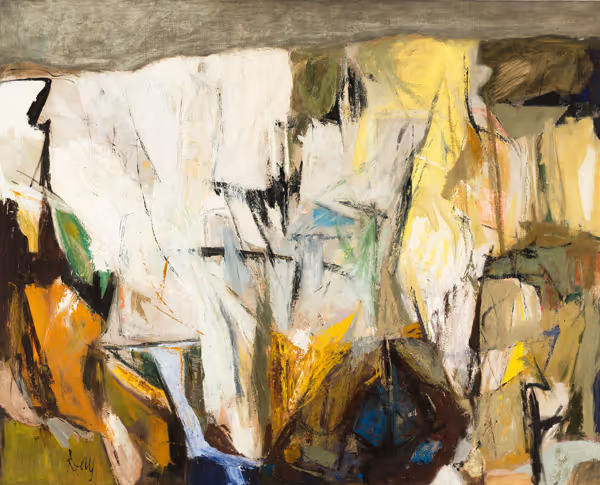
For Day, abstraction was an examination of the elements that define two-dimensional representation: gesture, line, composition, and color. Here, he applies paint in long gestural strokes, and his palette is dominated by earth tones with splashes of bright yellows and oranges. The title refers to The Ascent of Mount Carmel (c. 1585), a text by St. John of the Cross, a Spanish priest and mystic, which describes the journey of the soul to spiritual wholeness through good work and, ultimately, union with the divine. Fittingly, Day’s approach was inspired by the mountain landscapes of Paul Cézanne. Through his work, Day sought to explore painting itself, often expressing interest in “paintings about paintings” both in figurative and abstract pieces.
Born in Philadelphia, where he spent most of his life, Day served in the Pacific campaign of World War II, after which he attended college on the GI Bill. He graduated from Temple University’s Tyler School of Art in 1949, also earning a degree in education there. He began his career as an instructor shortly thereafter, primarily as an anchor figure in the Painting department of the Philadelphia College of Art (later the University of the Arts) and the graduate school of the University of Pennsylvania. His work is in numerous museum collections, including the British Museum, the Art Institute of Chicago, the Metropolitan Museum of Art, the National Gallery of Art, the Pennsylvania Academy of the Fine Arts, the Philadelphia Museum of Art, and Woodmere.