Staffel was a pioneering ceramicist who transformed porcelain into an expressive sculptural medium. He began his career as a painter, briefly attending the Art Institute of Chicago before traveling to Mexico, where he discovered his love for ceramics.
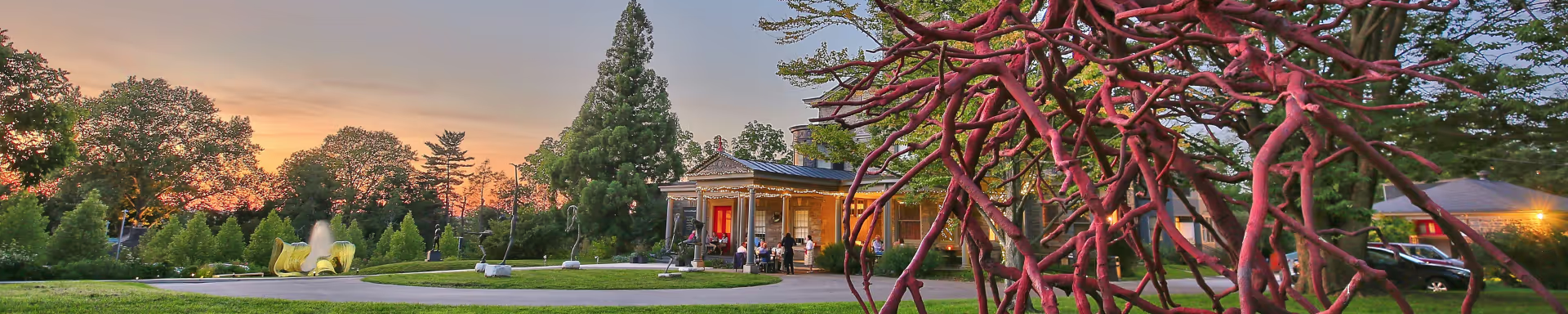
In 1940, Staffel joined the faculty of Temple University’s Tyler School of Art, where he went on to teach for decades. There he met student Doris Blitman, whom he married in 1942. The couple studied in New York before returning to Philadelphia in 1948 and settling near Woodmere in Chestnut Hill.
A mid-1950s commission for a porcelain dinner service proved transformative. Though the plates were unsuccessful functionally, Staffel was captivated by the medium’s ability to transmit light. This discovery launched his signature innovation—using raw, unglazed porcelain as a sculptural material—which was revolutionary at a time when most American ceramicists viewed porcelain as suitable only for decorative tableware.
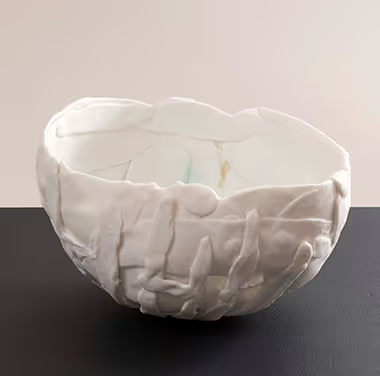
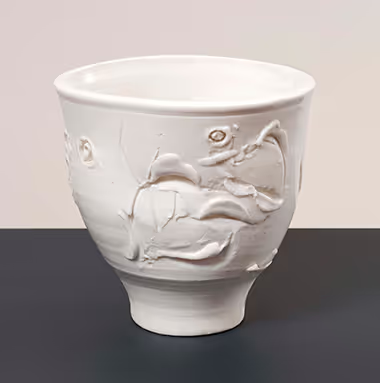
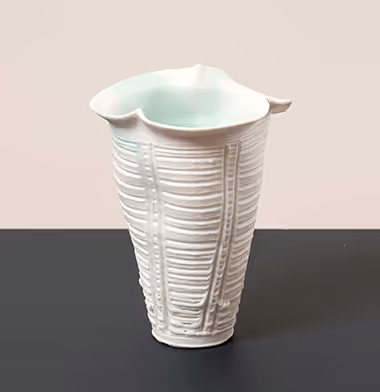
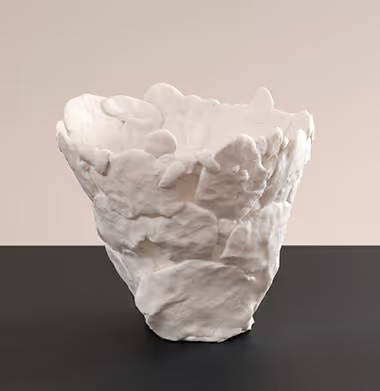
Staffel went on to develop his celebrated “Light Gatherers,” wheel-thrown and hand-built vessels that capture and transmit ambient light. By manipulating clay density through pinching, scoring, and layering, he achieved luminous contrasts where thin areas glow softly and thicker sections remain opaque. The artist used translucency and opacity to evoke space and material presence.
Eventually favoring pure white porcelain, sometimes tinged with blue, Staffel balanced painterly sensibility with sculptural grace, revealing both interior and exterior through ethereal luminosity. He received a Pew Fellowship in 1996, and the Philadelphia Museum of Art honored him with a retrospective the following year, affirming his legacy as a visionary of modern ceramics.