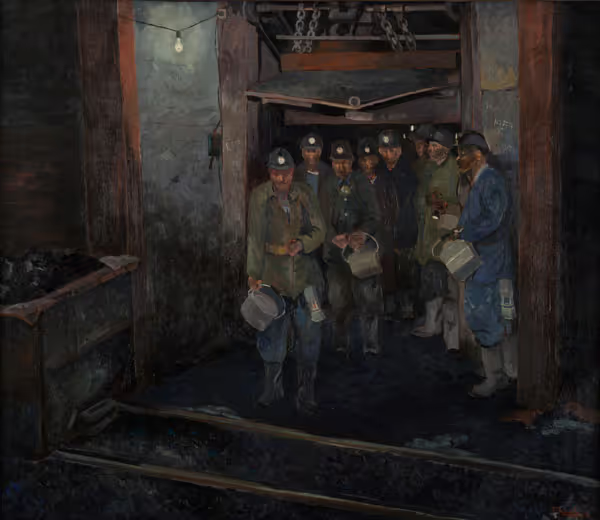
Nine male miners emerge from a mine shaft carrying pails and flashliNine exhausted miners emerge from a mine shaft carrying pails and flashlights. The shaft’s heavy chains and ominous metal door undergird the danger of their labor. In this late work, Freelon refers to a historic vote by the mine workers’ union guaranteeing equal pay for Black and white members. Between the miners’ headlights and the coal dust covering their faces, their race is difficult to determine—a deliberate choice by an artist keenly aware of injustices faced by African Americans, who frequently used his work to promote civil rights.
Born in Philadelphia to a family that prized education, Freelon was the first African American awarded a four-year scholarship to the Pennsylvania Museum and School of Industrial Art (later the University of the Arts). He earned a BA from the University of Pennsylvania and an MFA from Temple University’s Tyler School of Art. After serving as a second lieutenant in World War I, he joined the Philadelphia Board of Education faculty as art supervisor for elementary and secondary education, a position he held throughout his career. He also taught printmaking at the Philadelphia Museum of Art. Freelon continued his artistic practice while teaching, studying alongside printmakers Dox Thrash and Earl Horter and completing a two-year course in aesthetic philosophy at the Barnes Foundation. His first solo exhibition was held at the 135th Street Branch of the New York Public Library (now part of the Schomburg Center) in 1921. Though best remembered for impressionistic landscapes, Freelon also confronted social realities: his painting Barbecue, American Style appeared in the 1935 exhibition Art Commentary on Lynching in New York City.
![[Untitled (Still Life)]](https://cdn.prod.website-files.com/68961b6b3189b29172d19dc9/691c6cbd1ab83645fa0fdfee_Piper_2007.32_WEB-1.avif)