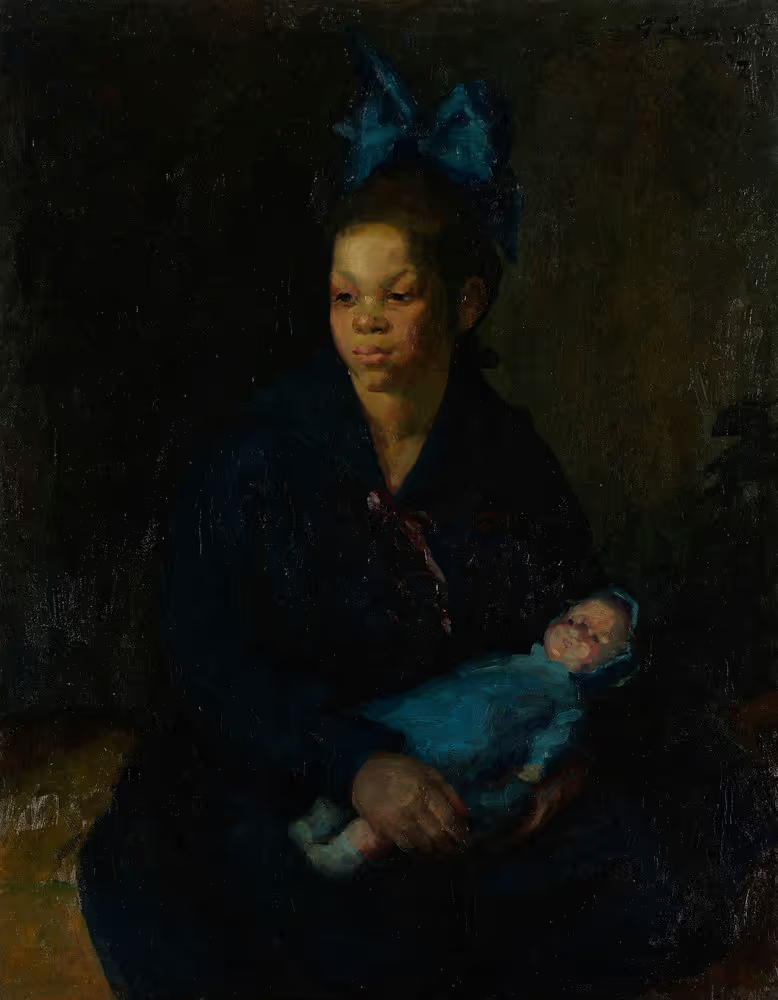
This portrait captures an African American girl in a pensive moment. Lost in thought, she seems to forget the doll cradled in her arms. With a fine bow and toy, she may have come from a family of means. Her white doll attests to the racial inequities she experienced—in the toy store, at school, on the street, and more. The gravity of the girl’s presence is all the more impressive given the work’s painterliness. Thick, loose brushstrokes suggest her expression.
Evans was one of a number of women artists working in Philadelphia in the early twentieth centuThis portrait captures a young girl in a pensive moment. Lost in thought, she seems to forget the doll cradled in her arms. With a fine satin peacock blue bow, which matches her doll’s dress, the girl most likely came from a family of means. Even so, her white doll may signify the racial inequities she experienced—in the toy store, at school, and in public. The gravity of the girl’s presence is all the more impressive given the work’s painterliness; rich brushstrokes provide a wide tonal range to both her dress and complexion. While her cloak appears black, if one looks closely, a vivid stroke at its base suggests it to be a midnight blue, complete with a purple bow at the neckline.
Evans was one of a number of women artists working in Philadelphia in the early twentieth century. She was born in Pittston, Pennsylvania, and studied at the Pennsylvania Academy of the Fine Arts (PAFA) in the 1890s under William Merritt Chase and Hugh Breckenridge and at the Drexel Institute of Art, Science, and Industry (now Drexel University). She was an illustrator for the Saturday Evening Post, a publication that was founded in Philadelphia in 1821. She studied at the Pennsylvania Academy of the Fine Arts (PAFA) in the 1890s under William Merritt Chase and Hugh Breckenridge. She attended at the same time as Robert Henri, leader of the Ashcan School, who became famous for down-to-earth, expressive portraits of children.