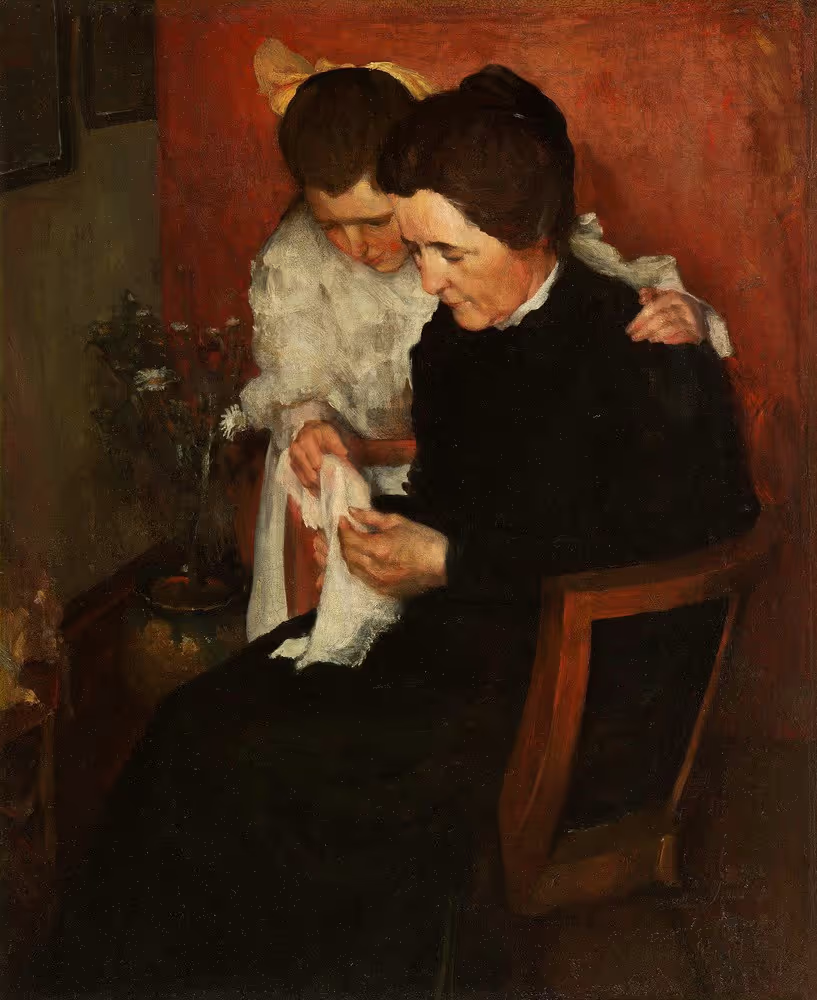
Well after he became a well-known modernist, Carles liked to surprise people by describing that among his most important teachers was the great portraitist of gilded-age America, Cecilia Beaux. In this portrait of his mother and his sister Sara, Carles applies paint in a smooth and creamy manner, as Beaux did, and he also constructs a scene of intimacy and a psychological connection. The two figures stare intently at an embroidery project, united in their shared focus.
Sara Carles (1894–1965) was an artist herself. Like her brother, she studied at PAFA and was awarded a Cresson Traveling Scholarship, with which she traveled to Paris and took sketching courses at the Académie de la Grande Chaumìere. Back in the United States, Sara taught at the Barnes Foundation at first but then moved to New York to pursue a successful career as a fashion illustrator.
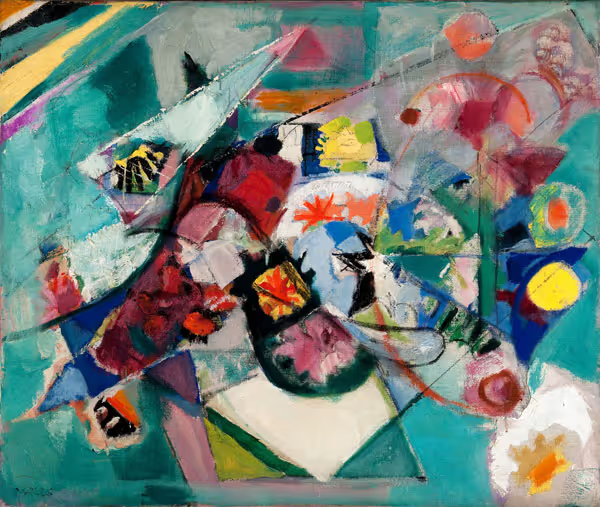
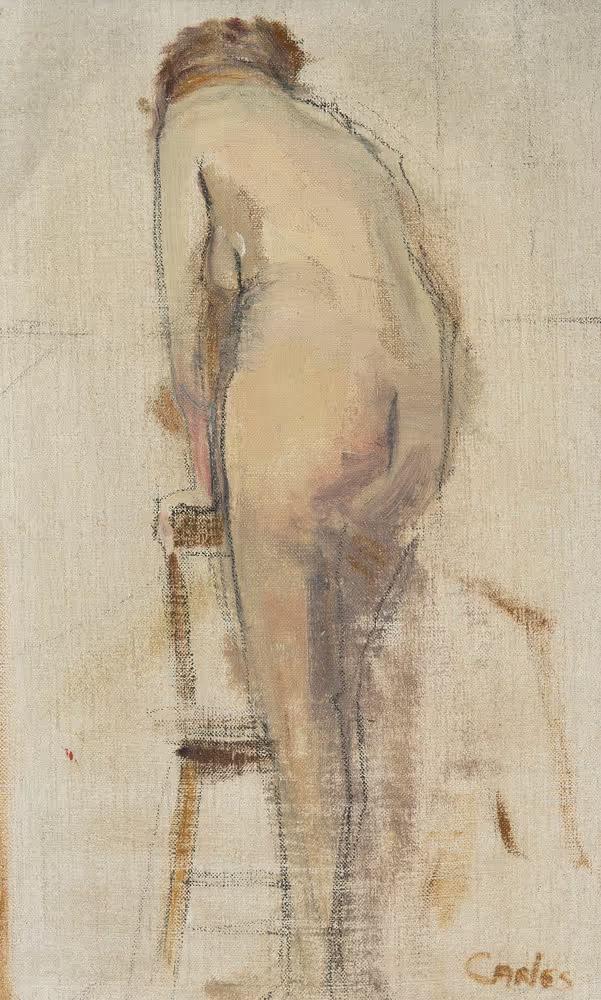
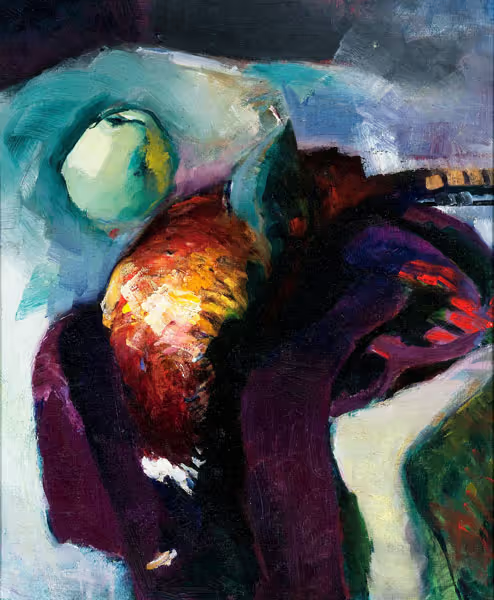
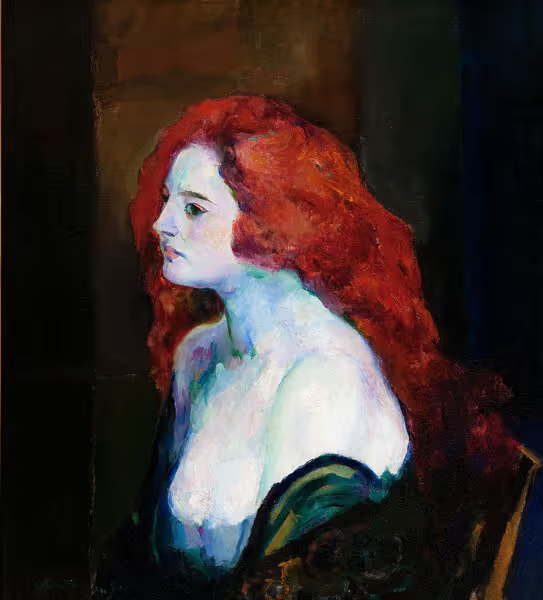
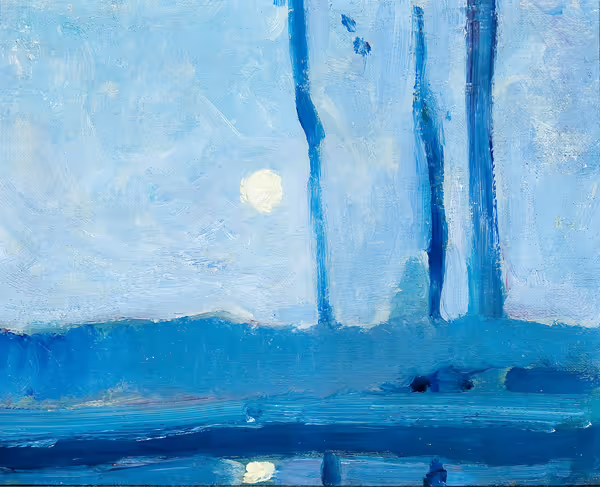
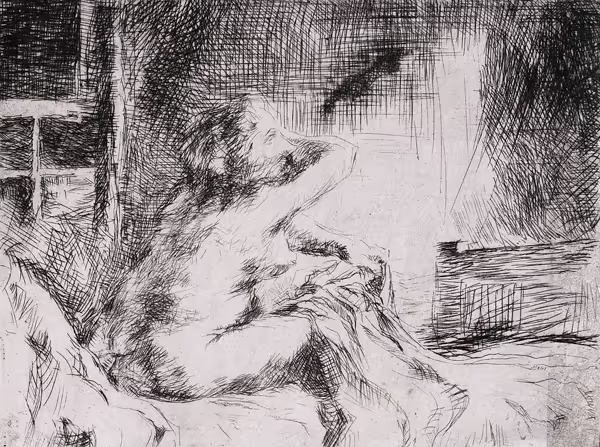
Arthur Beecher Carles was one of the leading exponents of modern painting in America. Known as a painter and colorist, Carles was born in Philadelphia and studied at the Pennsylvania Academy of the Fine Arts (PAFA). He spent several extended periods of time living, working, and exhibiting his work in Paris through the 1920s, and like Matisse, he believed that art was a response to what the eye saw and thought that “art is an affair of emotions,” rather than social commentary or literal transcription.
Carles was not only an important teacher who brought modernism into the mix of artist’s professional training, but he also organized three trailblazing exhibitions at PAFA: in 1920 featuring artists like Pablo Picasso, Honoré Daumier, and Gustave Courbet; in 1921, photographs by Alfred Stieglitz; and in 1923, the controversial collection of Dr. Albert C. Barnes.

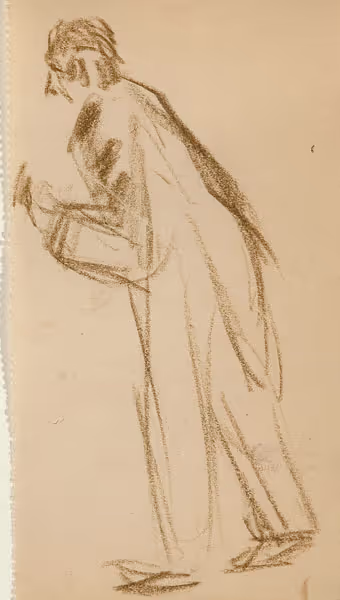
![Untitled [Woman]](https://cdn.prod.website-files.com/68961b6b3189b29172d19dc9/691b1bd4c64707dd2446ec77_Carles_2011.9.3_WEB-1.avif)