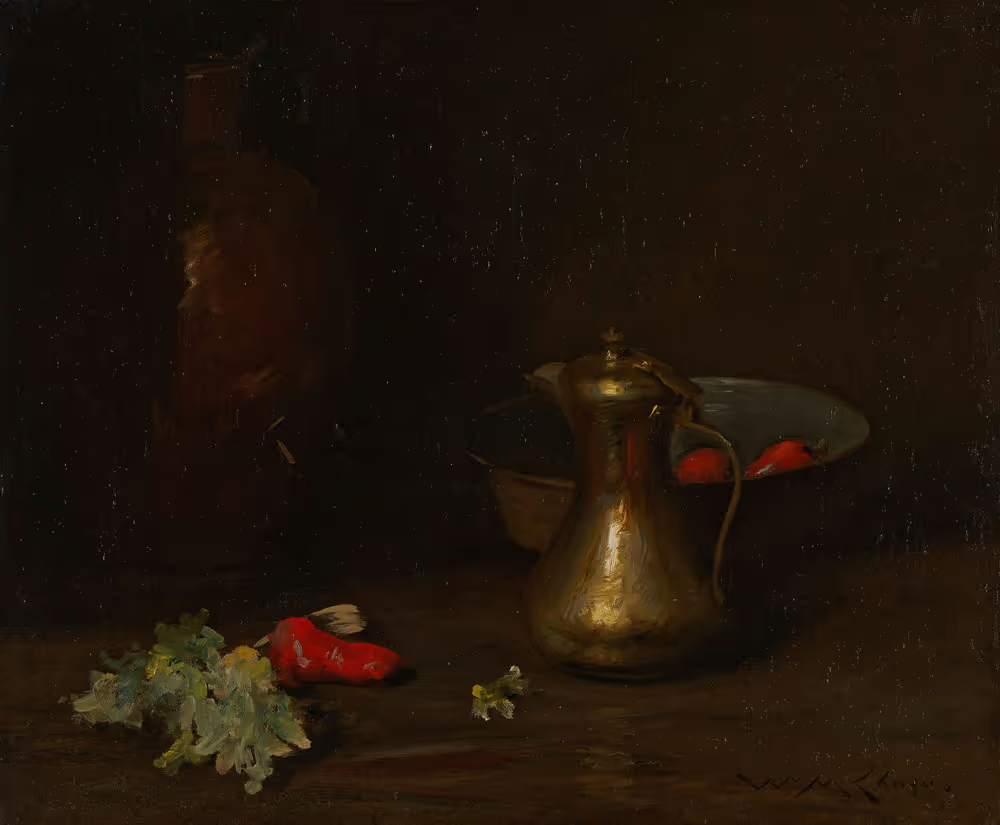
Still lifes were such a staple of Chase’s artistic production that he worried he would be remembered as “a painter of fish.” Through his intense study of Impressionist Édouard Manet’s work in the 1890s, Chase discovered still lifes by Spanish Baroque artists such as Diego Velázquez. The result was a period of dark and earthy compositions with objects from ordinary kitchens. Here, an assortment of vessels stands on a table in a dark interior. A brass coffee pot reflects a warm, narrow light and scattered vegetables serve as colorful counterpoints, drawing attention to the artist’s expert brushwork.
Chase’s artistic training began in Indianapolis and New York, and he studied abroad in Munich, enrolling in the Royal Academy in 1872. Encounters with Impressionism in Germany and France led him to experiment with modern techniques and subjects. Back in the US, he became a member of Ten American Painters, an Impressionist group that split from the conservative Society of American Artists, just as the French Impressionists had from the Salon of the Académie des Beaux-Arts in Paris. Chase taught for more than a decade at the Pennsylvania Academy of the Fine Arts and became an important instructor in New York.