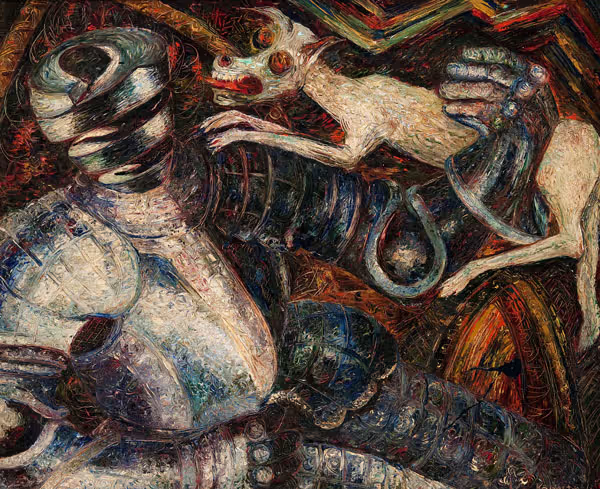
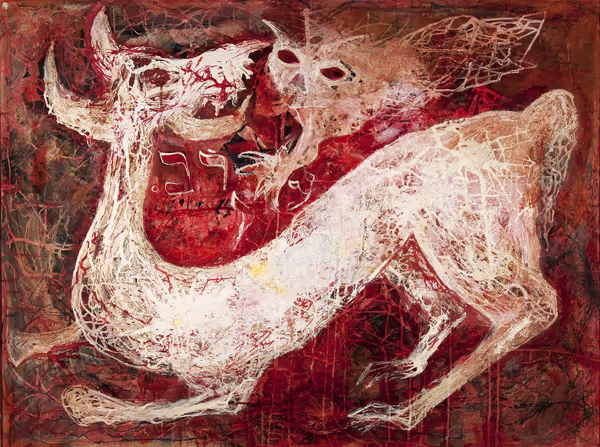
Kapustin etches into thick, visceral layers of paint in this antiwar dramatization. By 1948, the world had experienced the overwhelming horrors of World War II and its aftermath: the Holocaust, atomic bombs, and the beginning of the Cold War. The artist’s starved dog and fallen knight—apparently an empty suit of armor, with a chaotically spiraling helmet—are characters in an allegory of Armageddon. The painting is both a timely response to recent catastrophes and an addition to a centuries-long tradition of apocalyptic imagery, from medieval depictions of the Last Judgment to Picasso’s Guernica (note the dog's anguished eyes and pointed tongue).
Kapustin was born in Ladizhen, Russia, and immigrated with her family to the United States, settling in Philadelphia. She studied aesthetic philosophy and painting traditions at the Barnes Foundation, and studied with David Alfaro Siqueiros, an artist famous for his politically charged murals, in Mexico. A longtime instructor at the Fleisher Art Memorial, Kapustin participated in exhibitions at the Pennsylvania Academy of the Fine Arts, the Los Angeles County Museum of Art, the Butler Institute of American Art, the Philadelphia Museum of Art, and the Art Institute of Chicago. Kapustin was an important inspiration to her niece, Louise Fishman, whose work is also in Woodmere’s collection.
![[Untitled (Still Life)]](https://cdn.prod.website-files.com/68961b6b3189b29172d19dc9/691c6cbd1ab83645fa0fdfee_Piper_2007.32_WEB-1.avif)