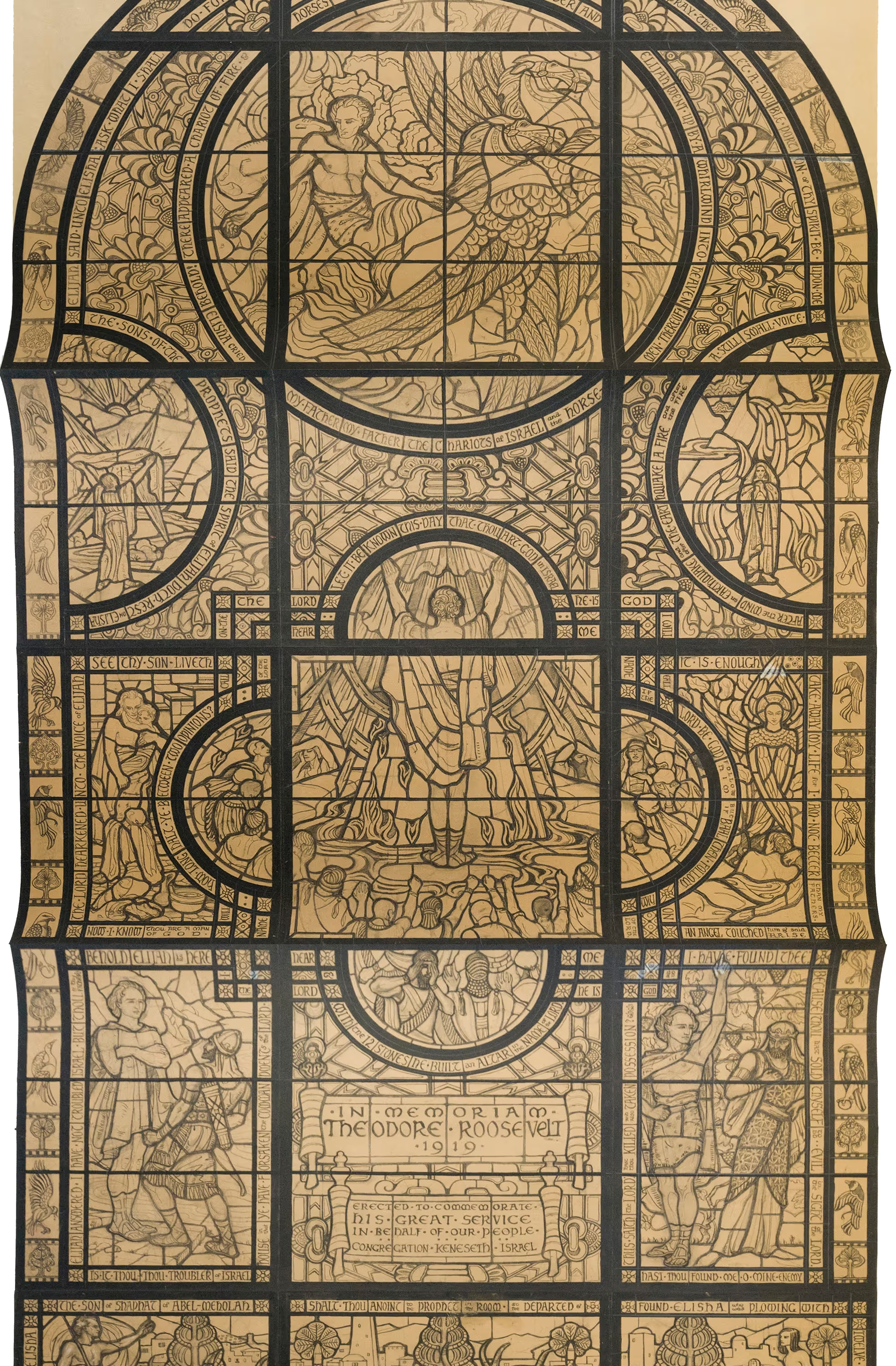
Emerson’s resplendent The Calling of Elisha is a design for a portion of her stained-glass Elijah Window, which she was commissioned to create for the Keneseth Israel synagogue as a memorial to Theodore Roosevelt (the synagogue, now in Elkins Park, was then located on Broad Street and Columbia Avenue). When the elder prophet Elijah meets the young Elisha plowing his family’s land, he recognizes that their destinies are intertwined as master and protégé (the biblical source, 1 Kings 19, is inscribed in this painting’s gilt frame). Silhouetted by the glowing red-and-pink sky, Elijah raises his hand to address Elisha, whom he will momentarily wrap in his billowing red cloak. The narrative is an allegory of the relationship between Emerson and her former teacher Violet Oakley, who in 1918 had invited Emerson to live with her at Cogslea, her home and studio in Mt. Airy, Philadelphia. The women lived there together as partners for the rest of their lives.
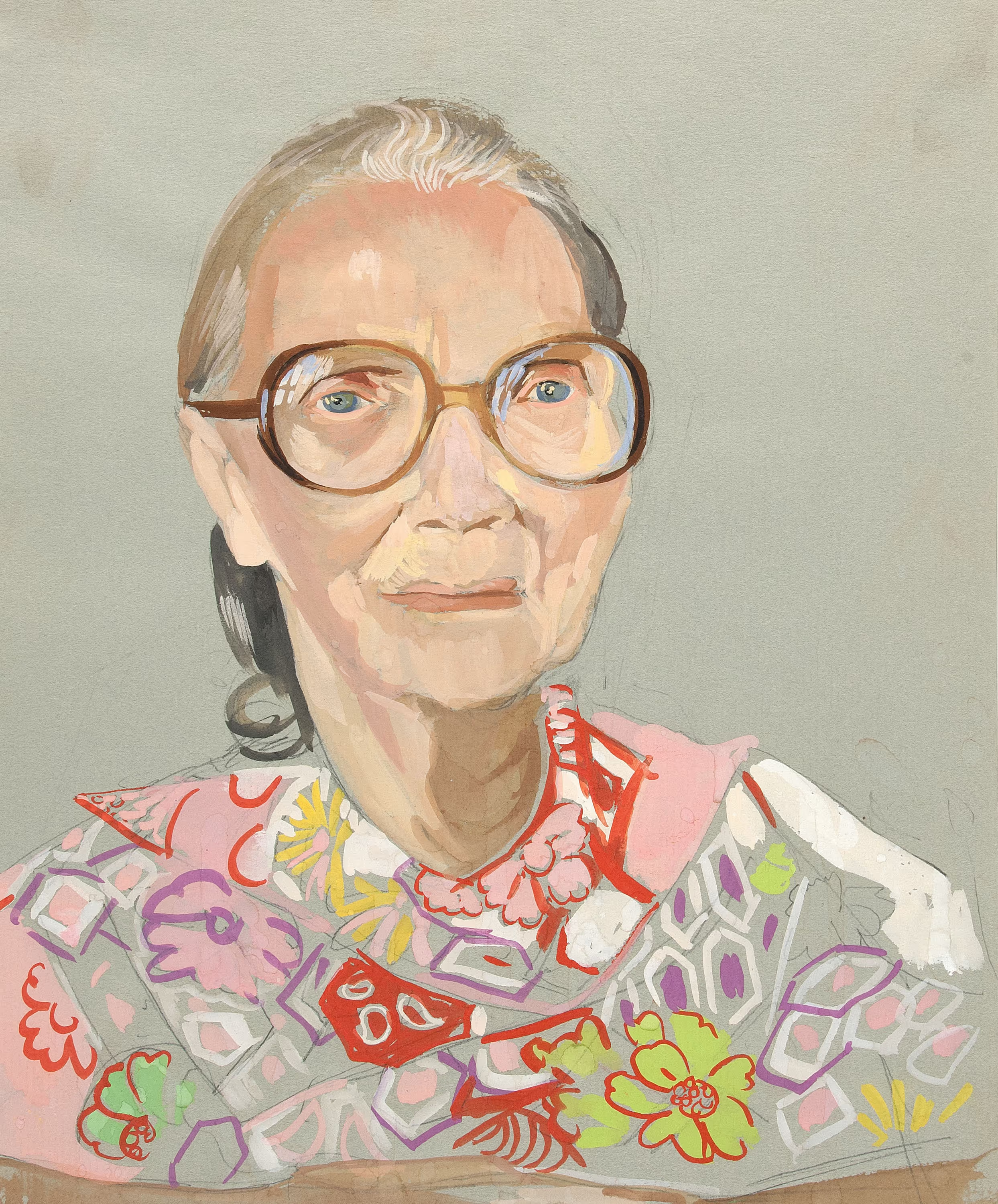
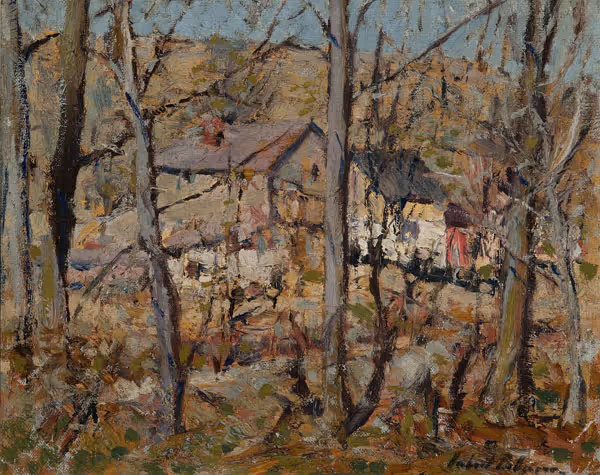
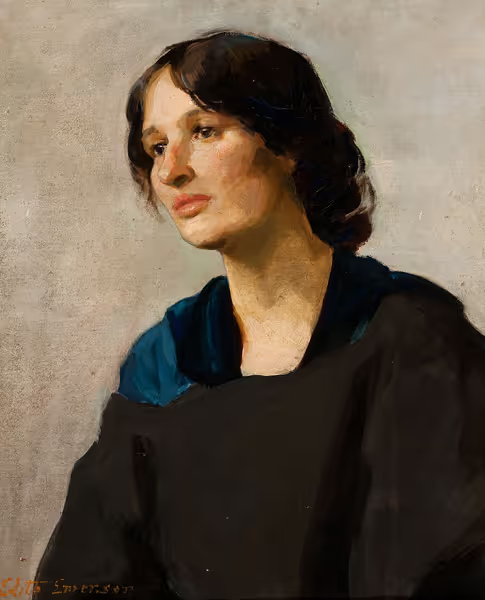
Edith Emerson was born in Oxford, Ohio, into a family of artists and scholars. She received an introduction into artistic training at the early age of twelve, as a student under Norwegian painter Olaf Branner, then the Fine Arts Department head of Cornell University. At 15, Emerson went to study at the Art Institute of Chicago. Later on, she took classes at Pennsylvania Academy of the Fine Arts (PAFA), where she became acquainted with Violet Oakley. To Emerson, Oakley was the “most stimulating... electrifying teacher, opening up undreamed of possibilities and encouraging every effort. It was exciting, especially to women students as it abolished any sense of inferiority.” PAFA awarded Emerson two Cresson Scholarships that enabled her to travel across Europe. She kept in close correspondence with Oakley, becoming her studio assistant in 1916 and then moving in with her in 1918. The two women developed a partnership that continued until Oakley’s death in 1961.
Emerson exhibited her work at PAFA from 1918 through 1945, and taught at institutions including Chestnut Hill College and the Agnes Irwin School. She moreover served as director of Woodmere from the early 1940s through her retirement in 1978. Her dedicated work for the institution is commendable; she was a multiple recipient of rewards for successful exhibitions she curated, and much of the preservation of Woodmere’s holdings and of its ephemera of local artists is due to her diligence and commitment to the art and artists of the Philadelphia area.
![[Academie]](https://cdn.prod.website-files.com/68961b6b3189b29172d19dc9/691c6ca9e70361807fc226c4_Emerson_2005.22_WEB-1.avif)