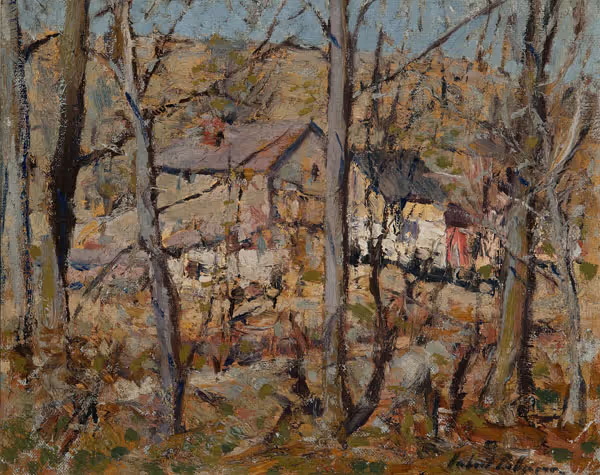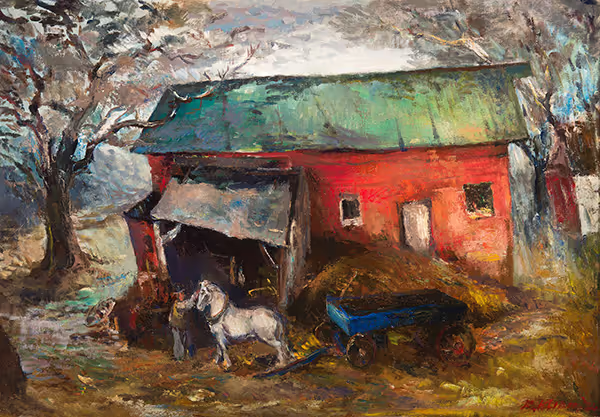
Here Kline explores themes of rural labor akin to the Depression-era imagery of urban work painted by many WPA artists. The scene depicts a farmer bridling a draft horse before a red barn, its roof weathered and sagging. The palette is earthy and subdued—the scene seems to take place on a cold autumn morning—and the brushwork broad and vigorous, conveying both the toil of agricultural life and the weight of its setting. Rather than emphasizing atmospheric depth, Kline presses the composition forward, filling the canvas with interlocking forms of barn, cart, and horse.
Kline was a leading figure of abstract expressionism, celebrated for his monumental black-and-white paintings that debuted in 1951. Born in Wilkes-Barre, Pennsylvania, he attended Philadelphia’s Girard College and studied in Boston and London before settling in New York, where he forged connections with Willem de Kooning and Jackson Pollock. Kline helped organize the landmark Ninth Street Show (1951) and exhibited widely, including at the Museum of Modern Art, the Venice Biennale, and internationally in The New American Painting as Shown in Eight European Countries (1958–59). His career was cut short by heart disease at age fifty-one, yet his work remains among the most iconic achievements of postwar American art.