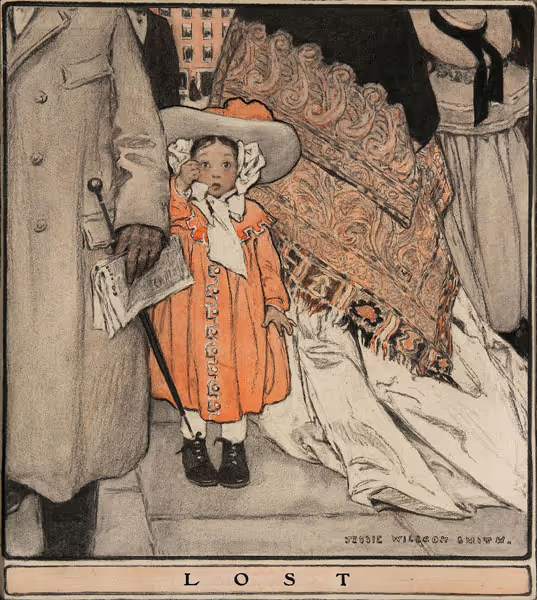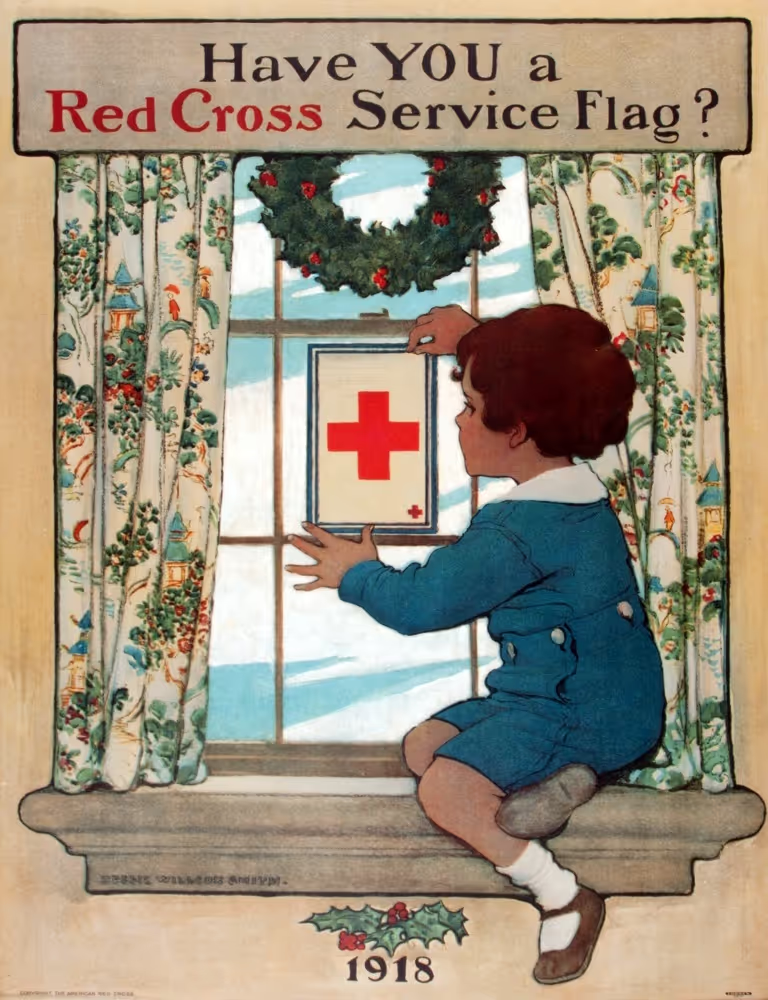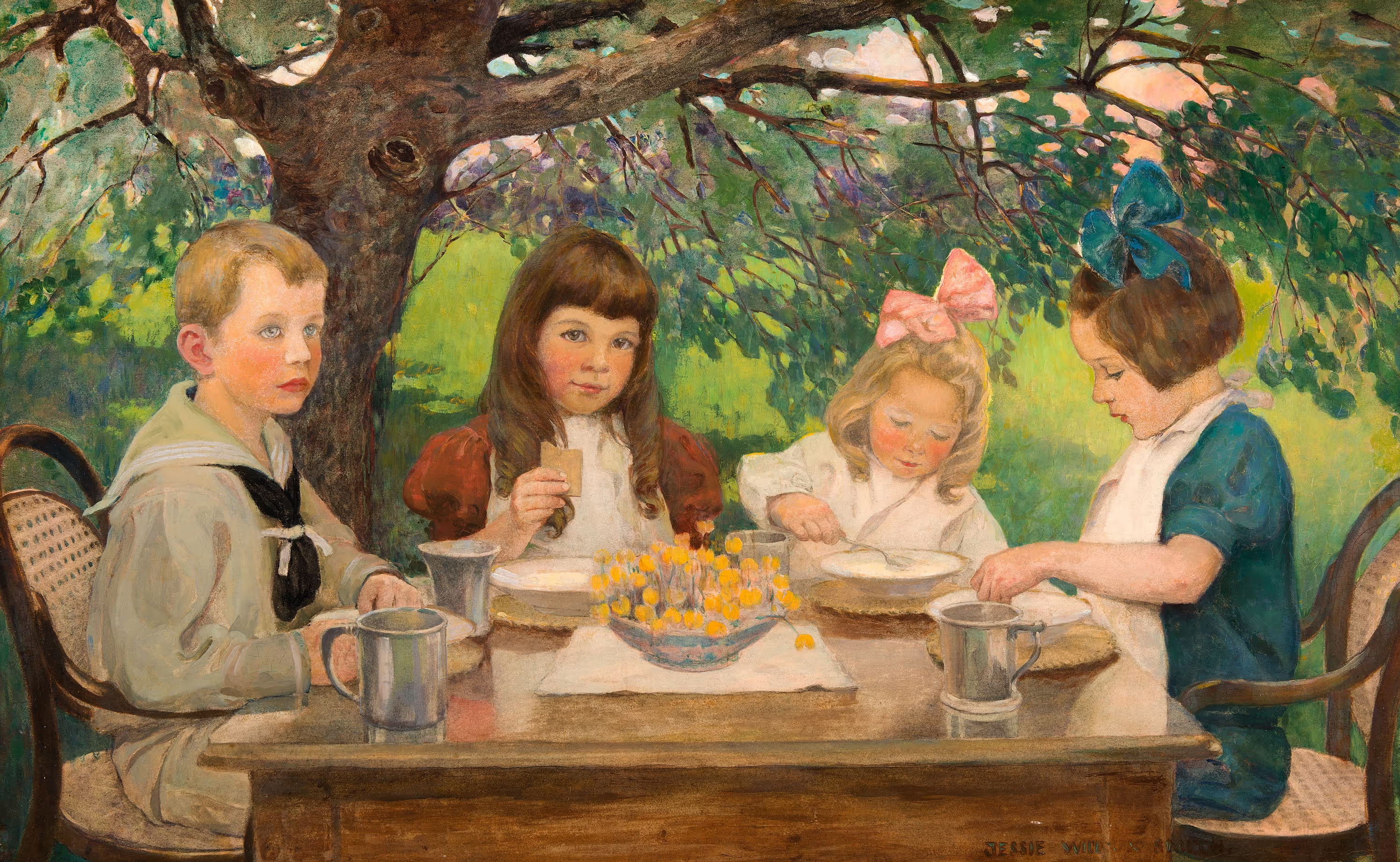
Jessie Willcox Smith, an esteemed illustrator of magazines and novels, was also sought out for her sensitive portraits of children. She strove to create scenes that elicited feelings of nostalgia and joy, often consulting photographs to grasp fully the likenesses and attitudes of her subjects. The pictures below, from the collection of the Library Company of Philadelphia, reveal Smith's careful study for The Tea Party, an intimate portrayal of four young members of a Chestnut Hill family: Howard, Margaret, Dora, and Polly Butcher. Smith conveys each child’s distinct personality and approach to their feast of graham crackers and milk. Howard, at left, seems dutifully to endure this engagement with his sisters while his mind wanders elsewhere. Next to him, though, Margaret looks up to meet the viewer’s eye.
Smith was born and raised in Philadelphia. She attended Friends Central School until she was sent to Cincinnati to finish her education with her cousins. She returned to Philadelphia to train as an artist, first attending the School of Design for Women (now Moore College of Art and Design), and then the Pennsylvania Academy of the Fine Arts (PAFA).
After graduation, Smith worked in the advertising department of Ladies’ Home Journal, where she produced product drawings for everything from stoves to soap. During that time, she enrolled in Howard Pyle's illustration classes at the Drexel Institute (now Drexel University), where she met Violet Oakley and Elizabeth Shippen Green. Smith, Oakley, and Green became known as “The Red Rose Girls” after the Red Rose Inn in Villanova, Pennsylvania, where they lived and worked together for four years beginning in the early 1900s.
Smith achieved great success as an illustrator. Her work appeared in periodicals such as Harper’s Round Table, Harper’s Young People, Collier’s Weekly, Scribner’s Monthly Magazine, and Saint Nicholas Magazine. Her cover illustrations for Ladies’ Home Journal were anticipated by readers across the country. She also illustrated several books, including Dickens’s Children, The Everyday Fairy Book, and A Child’s Book of Modern Stories.