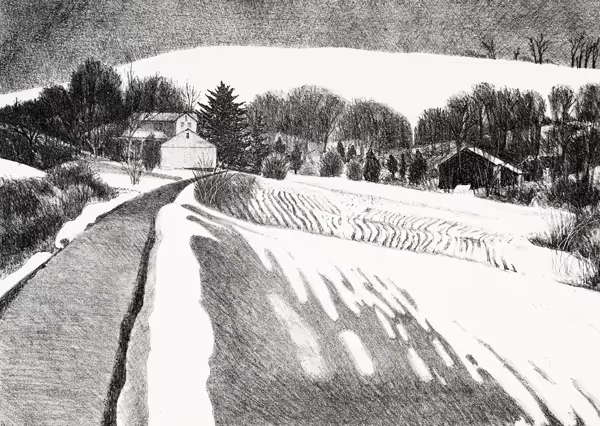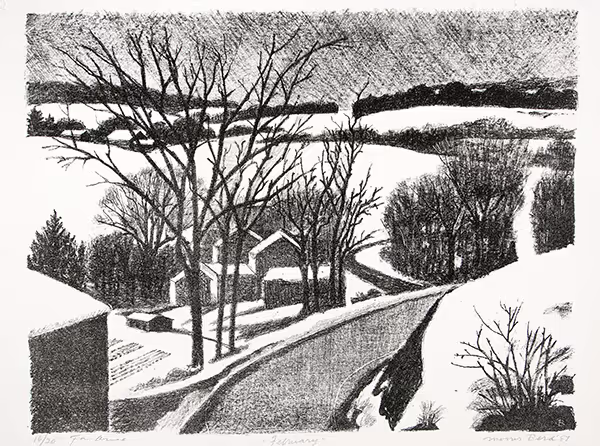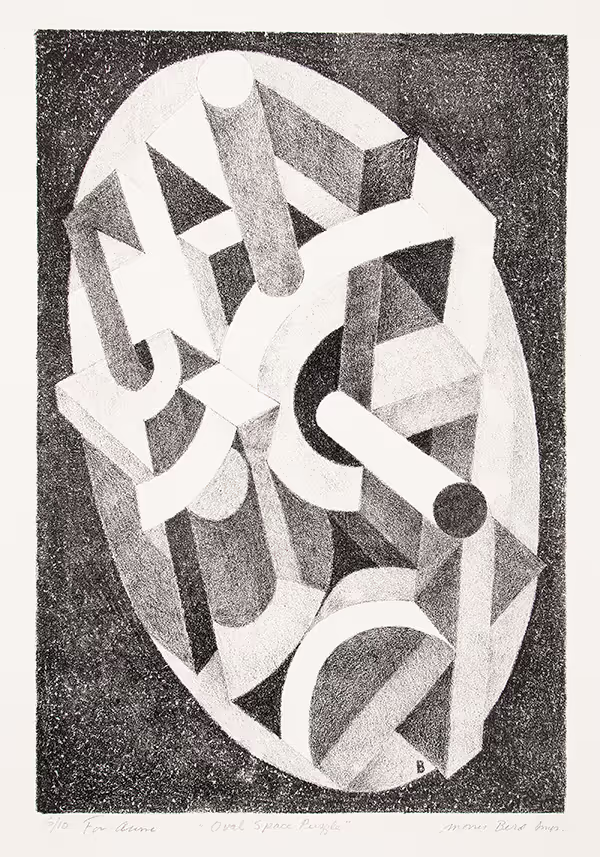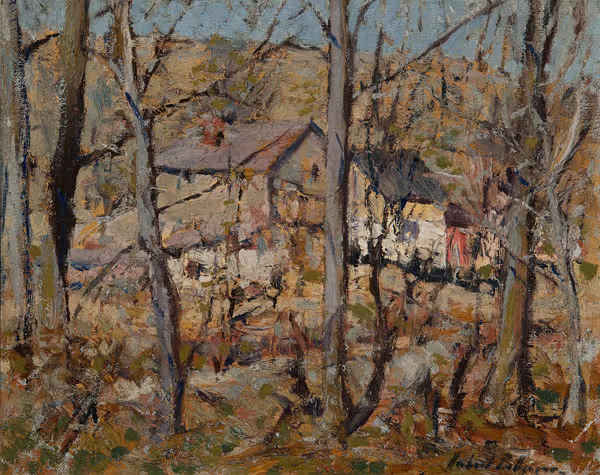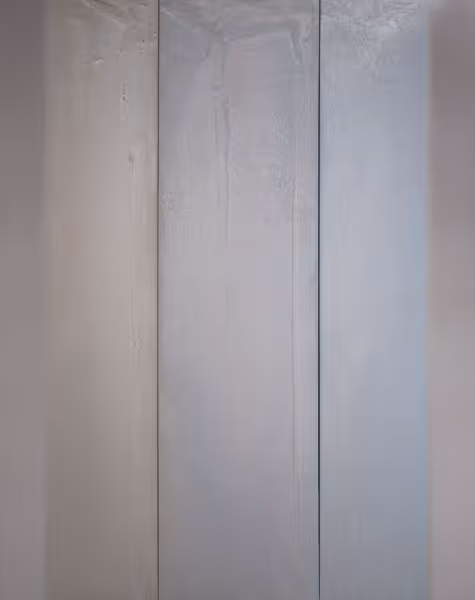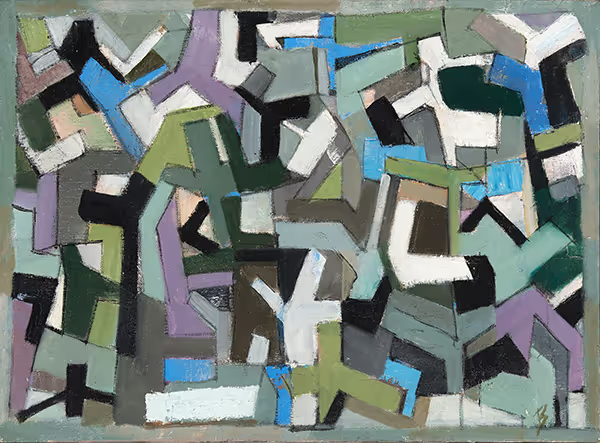
Interlocking shapes of cool blues, greens, and purples fill the shallow space of this tightly organized puzzle inspired by fallen tree cuttings. Stylistically, Berd's work ranges from realist landscapes—especially Lancaster County farm scenes—to abstractions based on childhood memories, games, and art history. Here natural forms blend with cubist and geometric abstraction, capturing the essence of memory without imitating physical form. The artist commented, “After I saw the Amish country, my work became more open, simple and abstract. All my earlier work was done directly from nature . . . I came to my current work of small abstractions, quiet and ordered, puzzles, using images from my mind and memories instead of nature.”
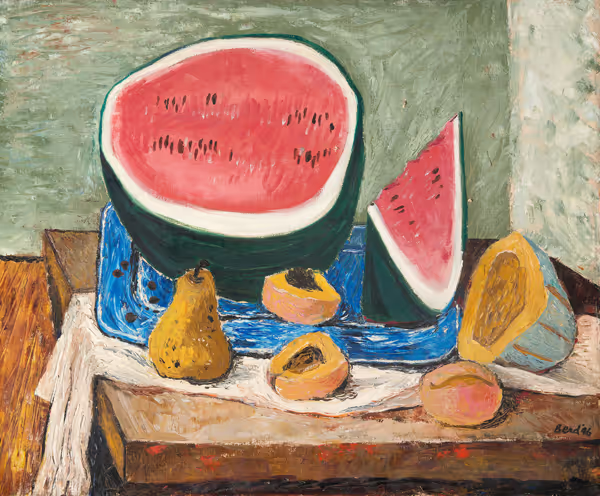
Born in Philadelphia, Berd was a longtime instructor at the University of the Arts (his alma mater) and a mentor to many Philadelphia artists. He worked as a commercial illustrator early in his career, but at age thirty-three he spent a year in Mexico where he made “pseudo-Joan Miró and pseudo-Pablo Picasso paintings.” The experience prompted him to break away from commercial work. Upon his return to Philadelphia in 1948, he began to achieve success as a fine artist when Dr. Albert C. Barnes acquired a painting, Nature Study (1947), from his first solo show; the work is now in the collection of the Barnes Foundation. Berd's work is also in the collections of Woodmere, the Philadelphia Museum of Art, the Pennsylvania Academy of the Fine Arts, and the Franklin Institute.