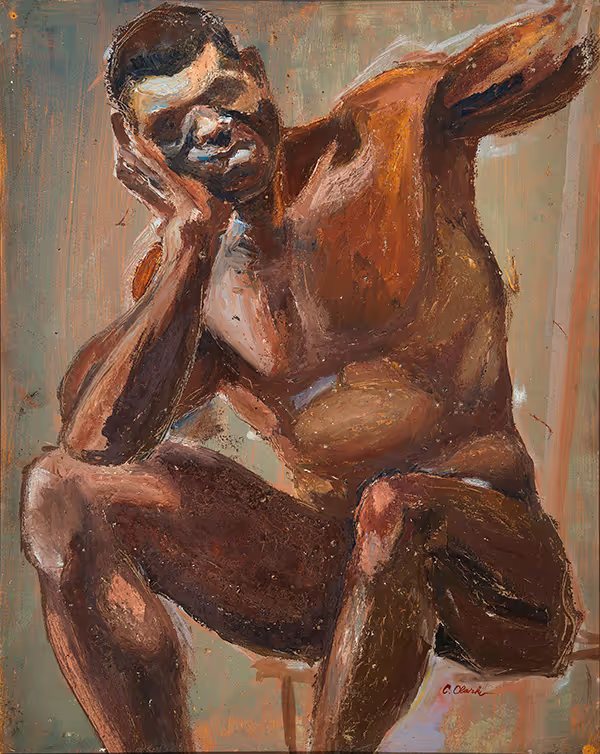
Here Clark portrays a Black man sitting in quiet contemplation, his hand to his face in a pose recalling Auguste Rodin’s The Thinker (1902). The man's crossed legs and twisted posture suggest both physical ease and inward focus. Using expressive brushwork and a palette knife, the artist built the form with rich tones of burnt sienna, umber, and ochre against a cool gray-green ground—his personal response to the expressionist painting he studied at the Barnes Foundation. By reimagining the classical “thinker” with a Black subject, Clark affirms the intellectual depth and inner life of African Americans—a powerful statement in the mid-twentieth-century United States.
Born on a Georgia tenant farm, Clark moved to Philadelphia's Manayunk neighborhood at age eight. After earning a scholarship to the Pennsylvania Museum and School of Industrial Art (later the University of the Arts) and studying at the Barnes Foundation, he received degrees from Sacramento State College and the University of California. Clark became a distinguished educator, building Talladega College's art department and teaching studio art and African American art history at Sacramento State and Merritt College in Oakland. He pioneered inclusive art education by designing A Black Art Perspective, the first curriculum of its kind.