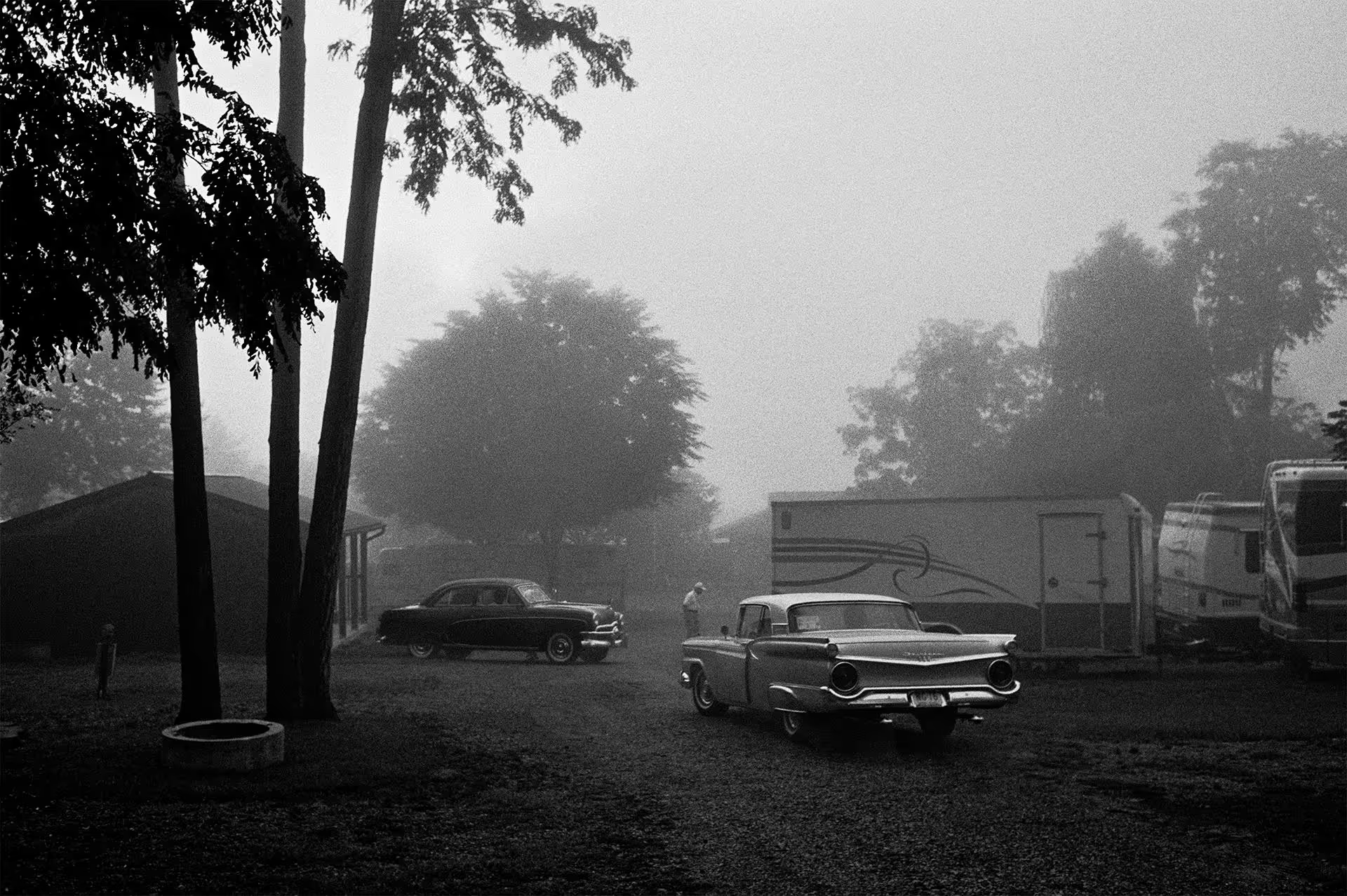
Susan May Tell on her photograph:
"Having grown up during the years when the United States of America was a manufacturing giant, it was important for me to reconcile those early memories with the reality of the present day--to see what this region, known to have fallen on hard times, looked like now.
This is what compelled me during the summer of 2012 to photograph rural West Virginia, Ohio and Pennsylvania. I stayed in campgrounds; slept in the back seat of my 90's sedan.
Six weeks. 4,000 miles. I had no itinerary. I followed suggestions of local folks met along the way who recommended places that evoked a connection between the past and present and places they believed important for an outsider to see. I recorded each day in my journal.
With Tri-X black-and-white film in my Leica M-6 camera with a 35mm lens, I walked around the huge, shuttered, steel mills, along train tracks and through deserted downtowns with ghost-like streets that had once been thriving.
I photographed only when seduced by a scene’s visual aspects and its impact on my gut. Another way to describe my process: 'The eye sees what the heart feels.'
About to leave the campground in Altoona, PA, after spending the night, I turned for one last look and saw the early morning haze surrounding the vintage cars. I framed and took the photo. I titled it Appalachian Mist.
'No ideas but in things' began to echo in my mind. Imagist poet William Carlos Williams used that phrase repeatedly in Paterson, his poem about the city of the same name. 'Things' refers not just to its buildings, streets and people but his experience of them; this was similar to how and what I photographed in this other time and place."