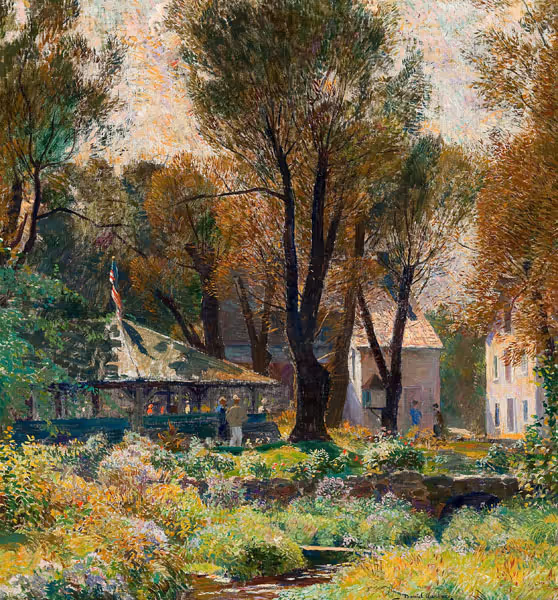
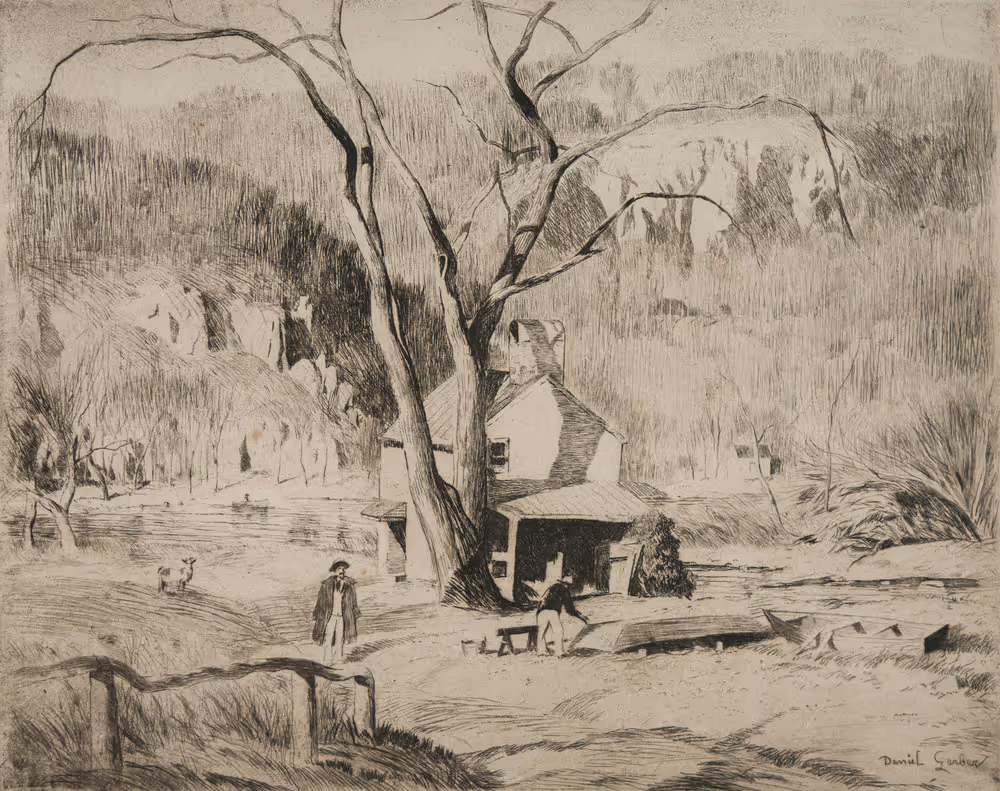
Spring Valley Inn depicts a popular establishment near Bethlehem, Pennsylvania, which was founded in 1806 and exists to this day, now called Ye Olde Spring Valley Tavern. According to the restaurant’s website, it flourished during the Prohibition era, largely due to its secluded location. Trap doors in the kitchen floor were used to conceal wine cellars. In the foreground of his painting, Garber depicts the inn’s charming gazebo, now enclosed for dining, and the spring itself, the source of the fresh trout served at the tavern. The artist’s ability to evoke midday sunshine—one of his fortes and passions—is evident in the warm, dappled light shimmering through the treetops, the shadows on the rooftop, the brilliant green tonalities in the foliage, and the profusion of flowers. The critic Frank Jewett Mather noted, “None of our landscapists...has caught so completely the very quiver of sultry weather.”
Born in Indiana, Garber studied art at the Art Academy of Cincinnati and the Pennsylvania Academy of the Fine Arts (PAFA). Like many American artists before him, he traveled to Europe to finish his training and experience the great art of the European capitals, returning to the United States in 1907. He settled near New Hope and began teaching at PAFA. He became an anchor instructor there, something of an opposing center of gravity in relation to those who favored more modernist approaches. Garber was close friend of Woodmere Director Edith Emerson, who organized some of the artist’s earliest exhibitions at Woodmere.
![[Untitled (Still Life)]](https://cdn.prod.website-files.com/68961b6b3189b29172d19dc9/691c6cbd1ab83645fa0fdfee_Piper_2007.32_WEB-1.avif)