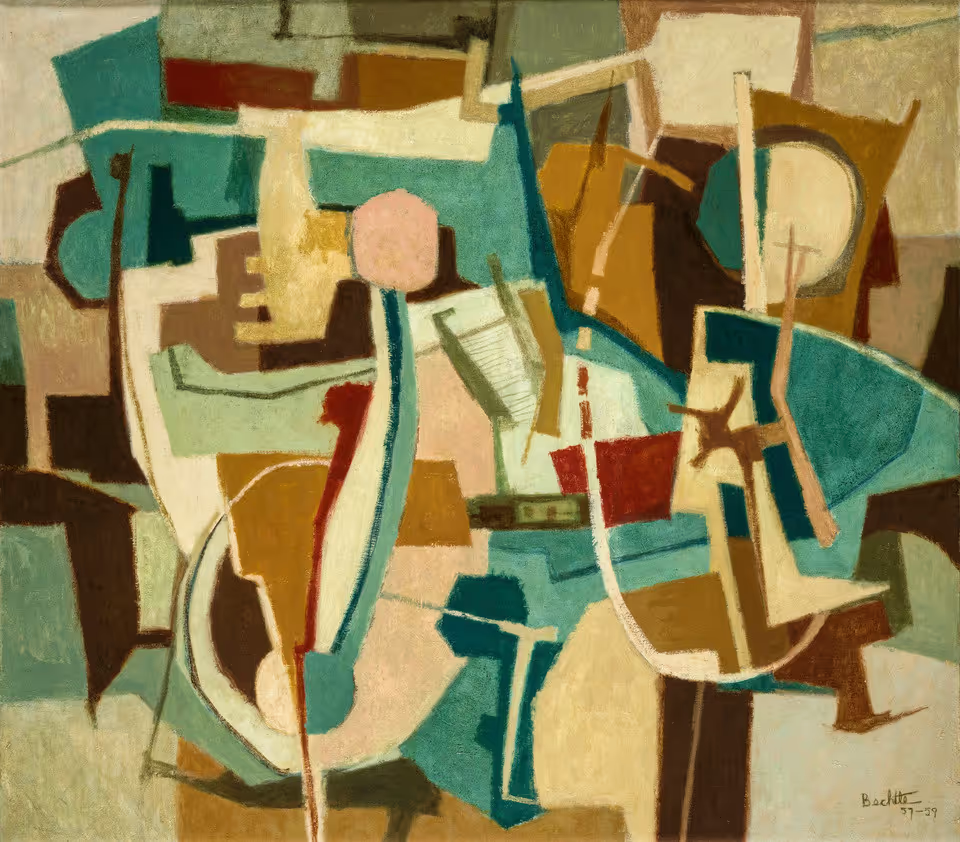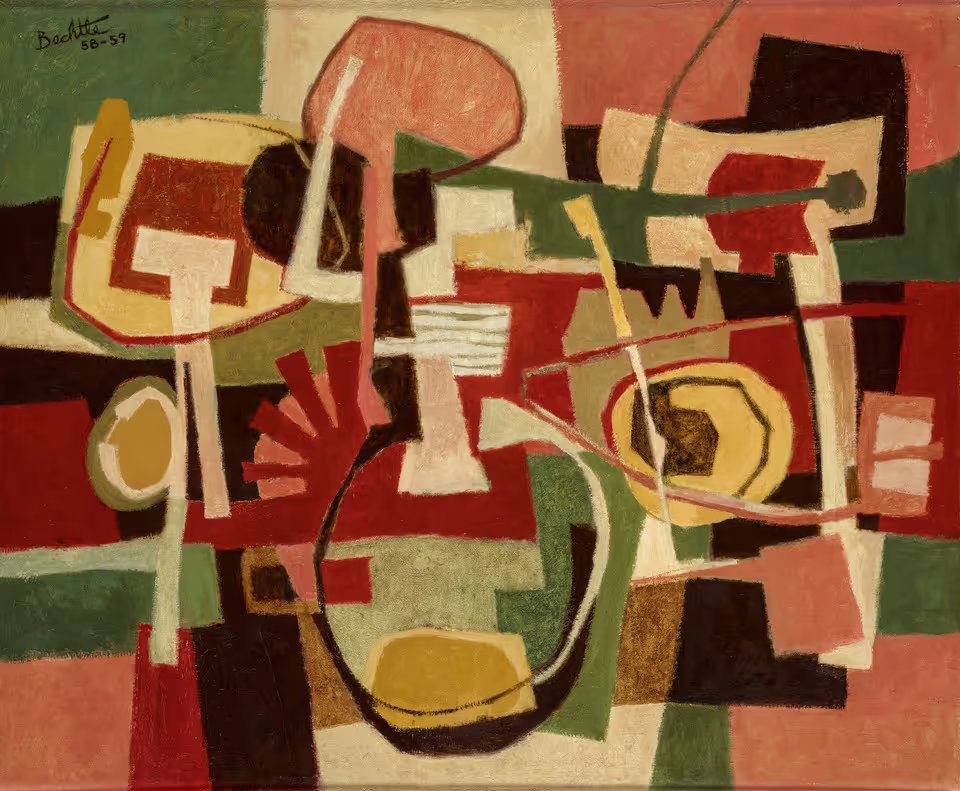
Bechtle launched this composition with a pencil sketch, then methodically planned the painting using a subtle set of red, green, black, and gold tones. The flat and well-balanced components are arranged parallel to the picture plane, similar to a cubist painting. The imagery is suggestive of the machinery that the artist likely encountered in his work as an industrial engineer. Bechtle did not title his abstract paintings until later in his career, and even then used only numbers as identifiers.
After serving in the US Army during World War II, Bechtle studied painting at Temple University’s Tyler School of Art and Architecture, the Samuel S. Fleisher Art Memorial, and the Pennsylvania Museum and School of Industrial Art (later the University of the Arts). Though Bechtle worked as an industrial engineer for the Philco Corporation, he devoted hours every day to art, moving from figurative early paintings to abstract compositions around 1950. Bechtle’s work is in numerous public collections, including Woodmere, the Akron Art Museum, Amherst College, Bowdoin College, Brandeis University, the Butler Institute of American Art, Denver Art Museum, the Santa Barbara Museum of Art, and the Smithsonian American Art Museum.