Meta Vaux Warrick Fuller
Description
Born in Philadelphia, Fuller earned her diploma in 1898 from the Pennsylvania Museum and School of Industrial Art (later the University of the Arts). The following year she traveled to Paris, studying with painter Raphaël Collin and winning acclaim for works that, in her words, were “of the soul, rather than the figure.” She gained the support of W. E. B. Du Bois, Auguste Rodin, and Henry Ossawa Tanner before returning to the United States in 1903.
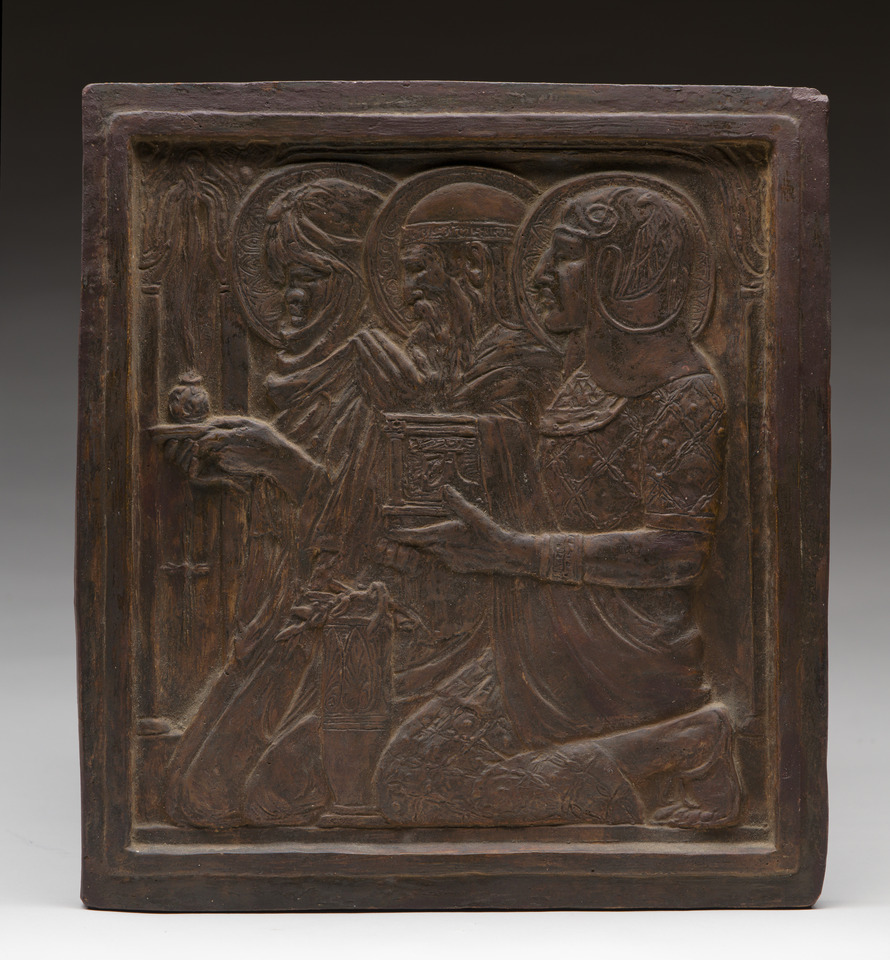
Although a 1910 fire destroyed much of her early output, Fuller went on to receive major commissions through the 1910s and 1920s. Among her most renowned works is Ethiopia, created for the 1921 America’s Making exhibition in New York. Like the contemporaneous Three Kings, it embodies Fuller’s use of the Black figure as a powerful symbol of African American cultural identity and aspiration.
We are always open to learning more about our collections and updating the website. We invite you to share your ideas, knowledge, and stories as they relate to the art in our collection. Contact us here.
Please note that work by this particular artist might not be on view when you visit.
Don’t worry—we have plenty of exhibitions for you to explore.
Related Art in Collection