Meta Vaux Warrick Fuller, a sculptor at the vanguard of the Harlem Renaissance, is celebrated for her groundbreaking portrayals of African and African American experience.
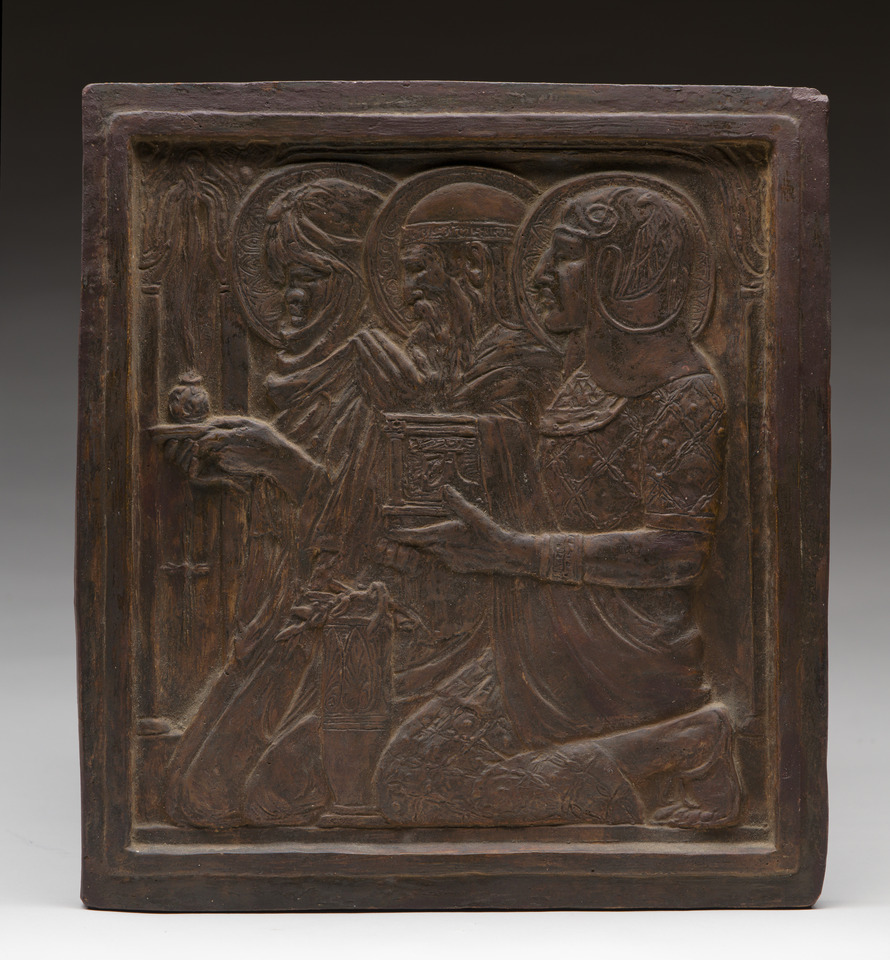
Te Adoremus Domine (Three Kings) depicts the Magi, who according to Matthew 2:1–12 followed a star from the East to Bethlehem in search of the newborn Christ. The Latin title translates as “Let us adore you, Lord.” Kneeling in reverence, the kings present their gifts of gold, frankincense, and myrrh. Fuller gives them African and Arabic features and attire, in keeping both with the Gospel narrative and her progressive artistic vision.
In developing the composition for Te Adoremus Domine, Fuller adapted an illustration by J. C. Leydendecker, published on the December 1900 cover of Success Magazine, a periodical founded to promote “New Thought” philosophy. This borrowing demonstrates Fuller’s broad artistic horizons: while she was an avant-garde Black sculptor with international stature, Te Adoremus Domine (Three Kings) also witnesses the interplay between “fine” and commercial art in the early twentieth century.
The Black king, in particular, has been the subject of significant art historical study, including an exhibition at the Getty and the multivolume Image of the Black in Western Art. Another version of Fuller’s Te Adoremus Domine is held by the Danforth Museum at Framingham State University, offering further insight into her exploration of this theme.