Chorus Girl is assertively arresting, partly because Borie employs various painterly techniques to grab attention: the dashing brushwork on the sofa and the blue and green modeling of the figure’s alabaster-toned body. Her gaze, pose, and frank display of her body directly quotes Édouard Manet’s famous painting of a courtesan, Olympia (1863), which became well known as a statement of art’s ability to pull back the curtain on the social preoccupations and hypocrisies of modern life.
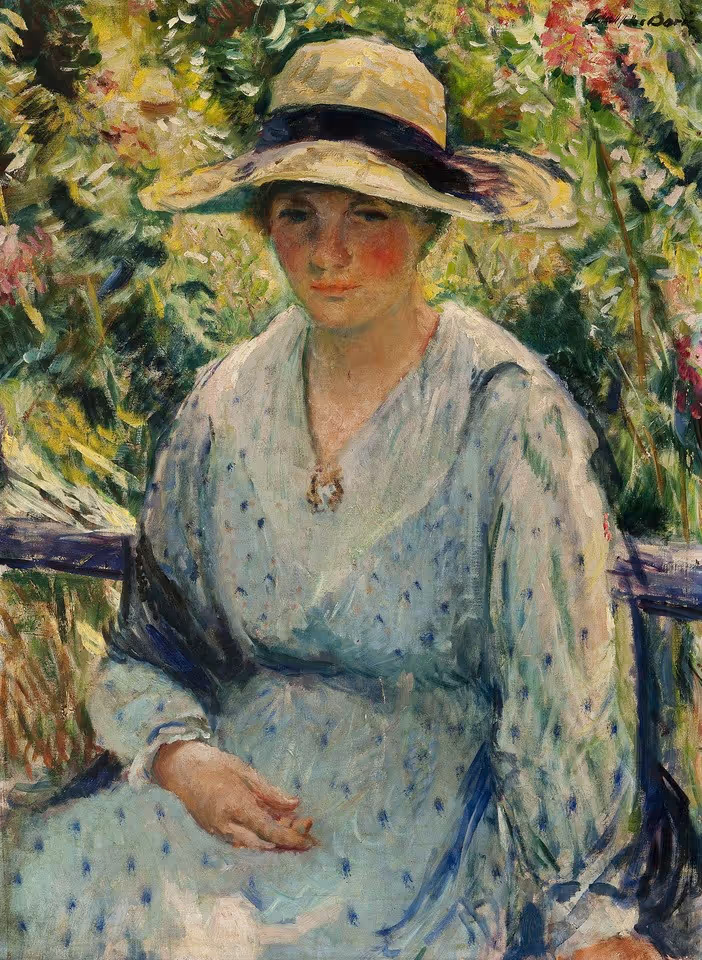
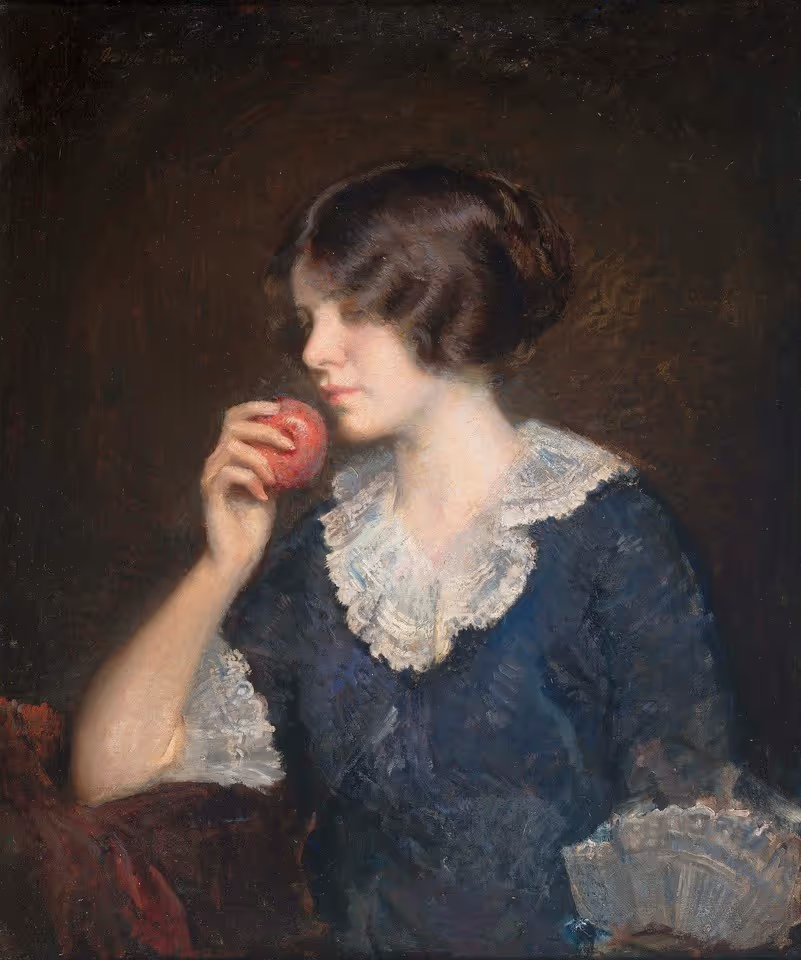
Born in Philadelphia to a prominent family, Borie studied at the Pennsylvania Academy of the Fine Arts and the Royal Academy in Munich. While living abroad, he frequently visited Paris, immersing himself in the avant-garde art scene. He subsequently returned to Philadelphia, where he remained for the rest of his life. Borie joined his contemporaries Arthur B. Carles, George Biddle, and Henry McCarter in rebelling against the Academy traditions and introducing modern art to the city. He became a member of the National Society of Portrait Painters, the Art Club of Philadelphia, and the National Academy of Design in New York. The Philadelphia Museum of Art held a memorial exhibition of Borie’s work in 1935.


![[Untitled (Still Life)]](https://cdn.prod.website-files.com/68961b6b3189b29172d19dc9/691c6cbd1ab83645fa0fdfee_Piper_2007.32_WEB-1.avif)