Toward the end of his career, Bloch turned repeatedly to the figure of the clown, a subject through which he explored the paradox of laughter amid pathos. He was inspired in part by French modernist Georges Rouault’s heart-rending portraits of clowns and circus performers as sacred subjects. Bloch's visual language was further transformed by Byzantine mosaics he encountered in Ravenna, Italy (a visit encouraged by Dr. Albert C. Barnes). The golden scrollwork in the background may quote mosaics in the Neonian Baptistery, while the clown king’s frontal pose and decorative treatment echo the mosaic of Emperor Justinian in the Church of San Vitale.
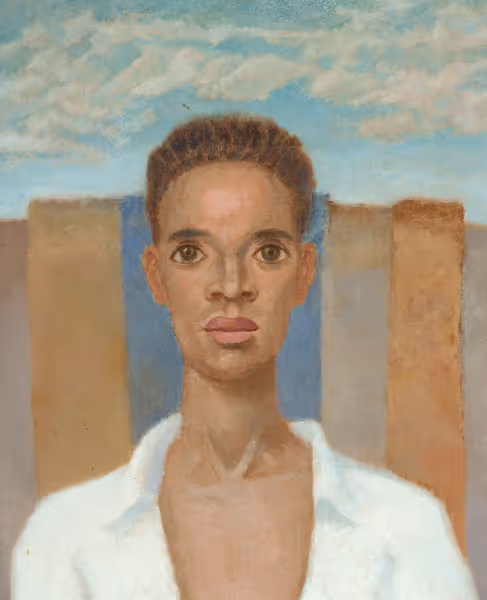
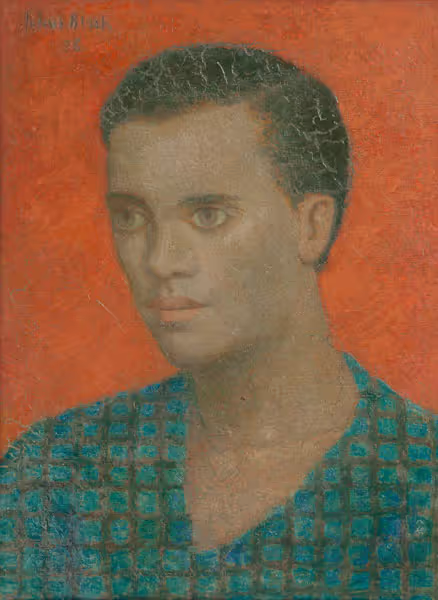
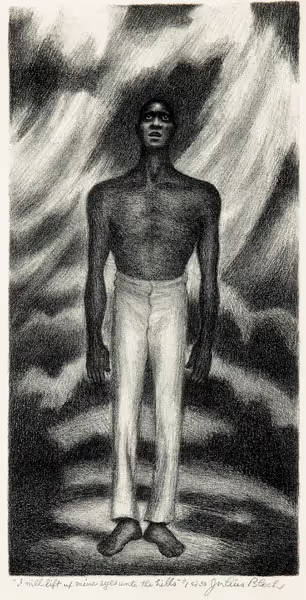
Born in Germany, Bloch immigrated to Philadelphia as a child. He trained at the Pennsylvania Museum and School of Industrial Art (later the University of the Arts), the Barnes Foundation, and the Pennsylvania Academy of the Fine Arts (PAFA), where he later taught for fifteen years. During the Depression, he gained nationwide recognition for his social realist paintings and was among the first artists employed by the Public Works of Art Project. Bloch maintained close ties with Philadelphia's Black community, exhibiting at the Pyramid Club and frequently depicting African Americans as his subjects.
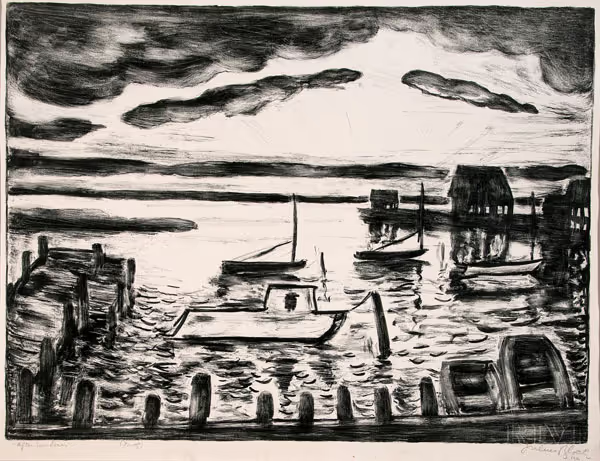
![[Haircut, Shave and Manicure]](https://cdn.prod.website-files.com/68961b6b3189b29172d19dc9/691b20344582a652ca060499_Bloch_2004.18.11_WEB.avif)