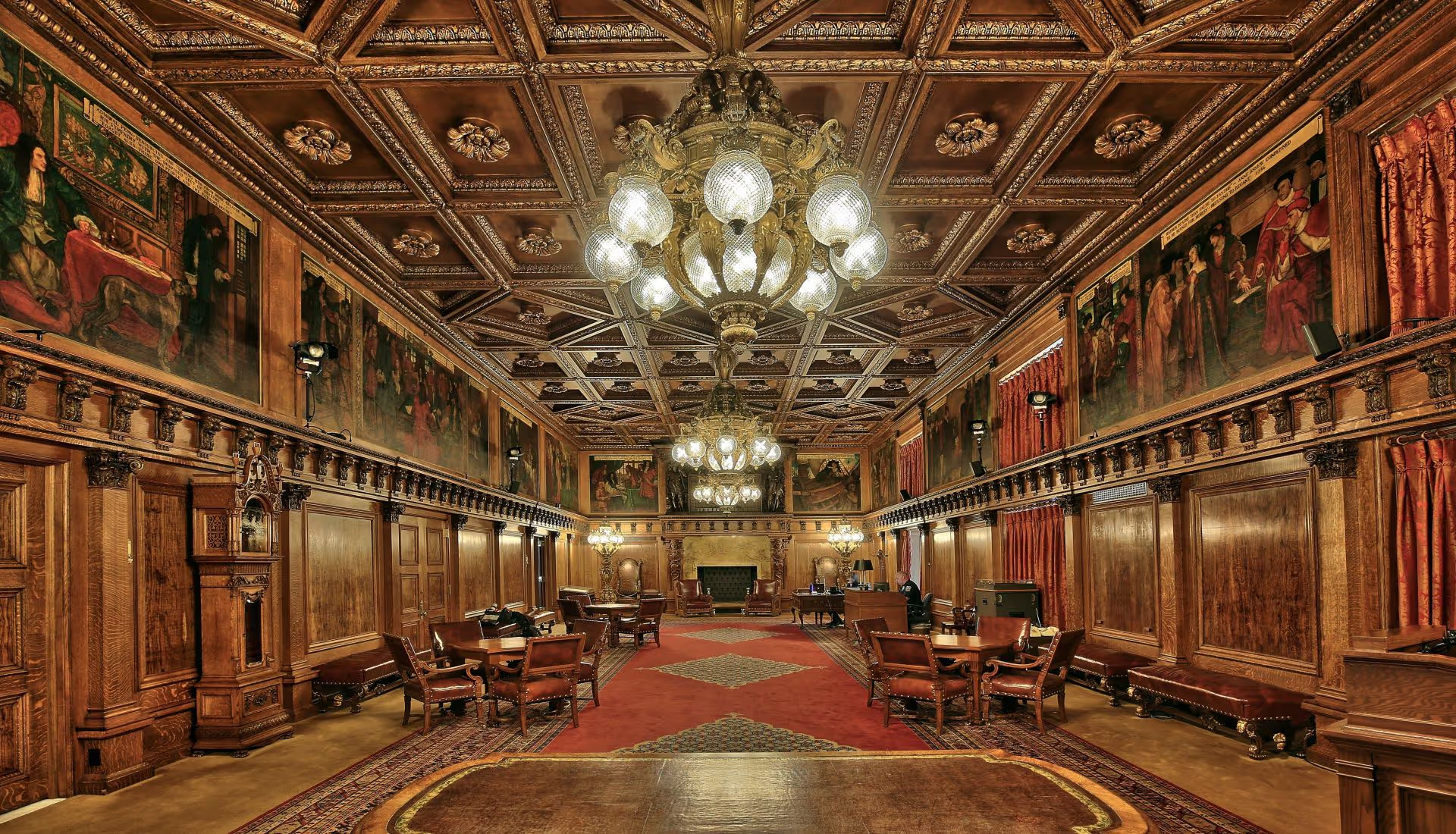
Senate Chamber, Pennsylvania State Capitol, "The Creation and Preservation of the Union"
To view Violet Oakley’s tour of the Capitol murals in Harrisburg, 1955, please click here.
After a hiatus of five years, Violet Oakley returned to the Pennsylvania State Capitol to paint the mural decorations in the Senate Chamber left unfinished after the death of chief muralist Edwin Austin Abbey in the summer of 1911. Created during a decade of national and international turmoil leading up to World War I, the Senate murals are political rhetoric in pictorial form. In a departure from the traditional celebratory agenda of civic mural painting, Oakley composed a critique of American history that showed racial inequality and economic exploitation as causes of war. A bold polemic statement that incorporates contemporary as well as historical events, The Creation and Preservation of the Union mural series is a singular achievement in American Renaissance mural painting.
The Senate Chamber, a vast room at ninety-five by eighty feet, presented Oakley with challenging design problems. Unlike the Governor’s Grand Executive Reception Room, which had a continuous frieze above paneled walls, the Senate Chamber required nine murals of various shapes and sizes, including a forty-four-foot frieze along the ceiling above the speaker’s rostrum. The opulent interior was constructed with an Irish green Connemara marble wainscot, dark green walls, a coffered ceiling with gilded ornaments and caryatids, and mahogany doorways framed like Doric porticoes.1 The verdant color scheme was planned to complement Abbey’s murals of military scenes, such as The Camp of the American Army at Valley Forge, 1787, the only panel he completed for the room.
Rather than accommodating the décor, Oakley pursued an entirely different aesthetic direction. Her intention was to “take up the threads and weave on the tapestry of the History of the State” that she had begun in the governor’s reception room. She would show that William Penn had established an ideal society in Pennsylvania with political freedom for a diversity of races, ethnicities, and creeds who lived together in peace without a militia for more than seventy years. Designed as gilded quattrocento altarpieces complete with predellas to emphasize their religious significance, the two murals on the back of the Senate Chamber illustrated the Quaker principles of nonviolence and racial equality. The Little Sanctuary in the Wilderness (The Legend of the Latchstring) depicts Quaker settlers refusing to bar their cabin door against Native Americans. In The Slave Ship Ransomed, the only American civic mural depicting the slave trade, a Quaker buys a cargo of captured Africans in order to liberate them. The historical narrative shifts to the front of the room where the consequences of abandoning these Quaker principles erupt in the American Revolution and the Civil War.
That denial of political liberties to the British colonists led to the War of Independence is represented on the left of the speaker’s rostrum by George Washington Marching through Philadelphia, 1777 (The Way to the Brandywine). In the mural at right, the new nation is organized at The Constitutional Convention where, however, the presence of an enslaved African is ignored by the Founding Fathers. Slavery splits the Union, represented on the far right by General Meade and Pennsylvania Troops in Camp Before Gettysburg, 1863. In the corresponding mural at left, Lincoln at Gettysburg, the president exhorts the living to dedicate themselves to “the unfinished work” of unification.
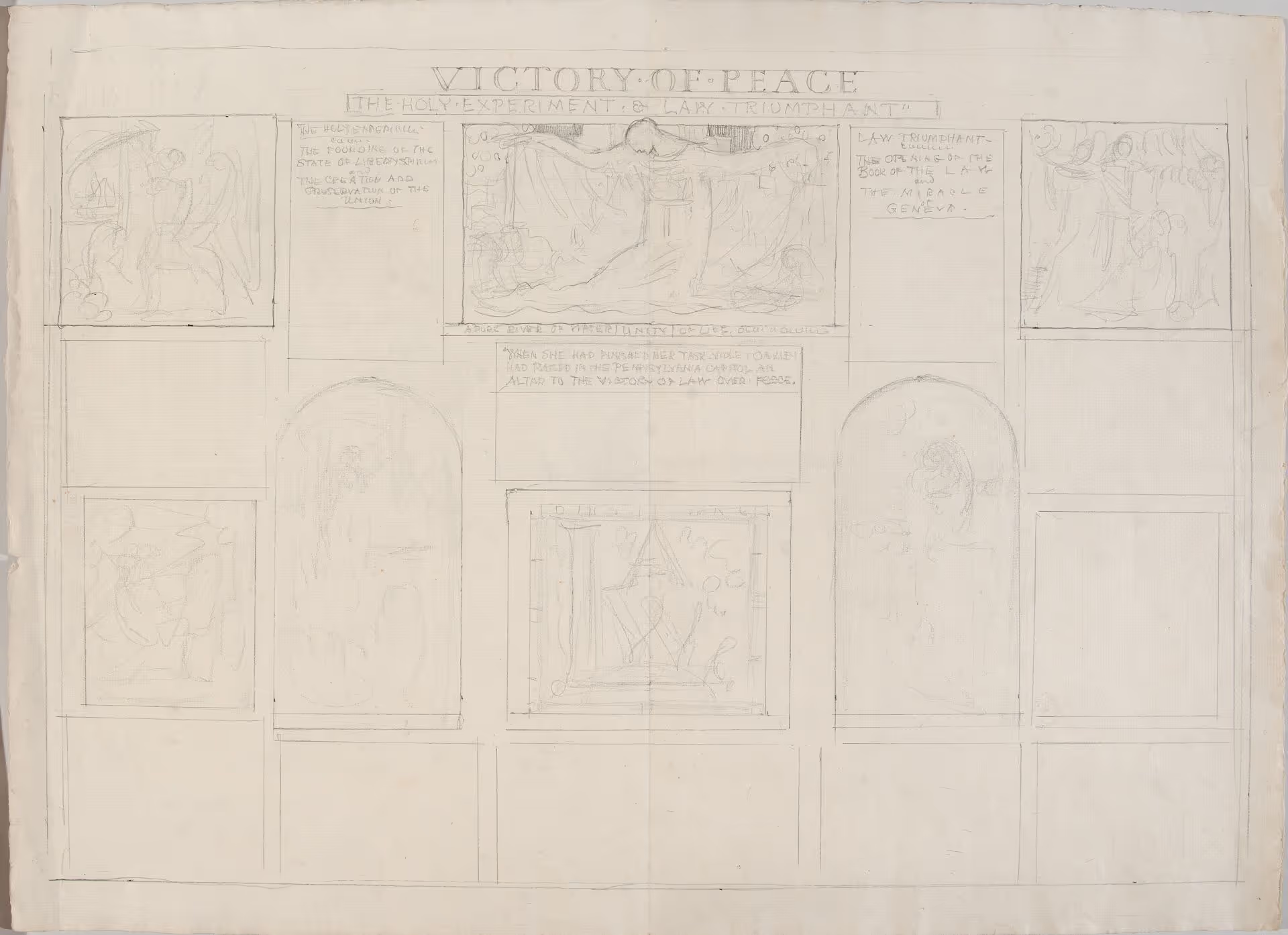
The frieze Unity conveys Oakley’s vision of the realization of Penn’s plan for a Parliament of Nations in 1693, which she called “the Holiest Experiment of all, the Union of the World.”2 She embraced the philosophy of universal history in which the American political system was understood to be a stage in the evolution of the Ideal State.3 To represent Hegel’s belief that the “Kingdom of God and the Socially Moral World” were “one Idea,” she composed an allegory that combined contemporary imagery with the Book of Revelation.4
According to Oakley, international unity will require disarming The Armies of the Earth, represented on the left by the combatants of the World War I. Preventing militarism will achieve the end of warfare, symbolized by men “beating swords into ploughshares” (Isaiah 2:4), soldiers laying down their weapons, and a Red Cross doctor and nurse putting down their instruments. The slave-drivers, greed, ignorance and fear, must be eliminated to bring about The End of Slavery, represented by a group of African, Asian, and Middle-Eastern peoples gesturing toward Quaker social worker Jane Addams, who holds a manuscript of Penn’s Fruits of Solitude. The abolition of sex trafficking is portrayed by a man removing a ball and chain from a “scarlet woman.” Kneeling kings remove their crowns while nearby Dante, the author of De Monarchia, offers the fruits of freedom to an African child. All of the figures pay homage to Our Blue Lady of the Water of Life, a monumental personification of the oceans that encircle every continent and the rivers that flow out of the throne of God into the New Jerusalem (Revelation 22:1). Derived from the Renaissance iconography of the Madonna della Misericordia, she is a mother-goddess whose arms reach out to protect the entire human family.
When the Senate Chamber murals were unveiled in a ceremony attended by Pennsylvania officials on Lincoln’s birthday in 1917, they embodied ascendant values in American politics: the dignity of labor promoted by the Progressive movement and neutrality toward the European conflagration championed by President Woodrow Wilson, who was reelected with the slogan “he kept us out of the war.” But in April, Wilson reversed course and declared war on Germany in response to the sinking of the Lusitania and the swift passage of the Alien and Sedition Acts in 1917 criminalized antiwar statements and protests.
Fortunately for Oakley, her allegorical imagery was sufficiently oblique to protect her murals from censorship. The Unity frieze remained her proudest accomplishment. After the war ended and the Treaty of Versailles established the League of Nations in 1919, she asserted that it was sufficient reward for daring to paint international understanding and unity “at a time when the idea of a federation of the world was considered—by the vast majority of mankind—a most wild and forlorn dream of visionaries.”5
1 The Pennsylvania Capitol: A Documentary History, vol. 1, Capitol Preservation Committee (Princeton: Heritage Studies, 1987): 245.
2Ibid. 79.
3 Oakley lists John Fiske’s American Political Ideas Viewed from the Standpoint of Universal History (Houghton Mifflin, 1911) among her references in The Holy Experiment: Our Heritage from William Penn, 1644–1944, (Philadelphia, 1950): 187.
4 Oakley (1950), 87.
5 Oakley (1950), 87.

Works in Woodmere’s Collection



Works in Other Collections

The Little Sanctuary in the Wilderness (The Legend of the Latchstring), from the mural series The Creation and Preservation of the Union, 1911-20, by Violet Oakley, Senate Chamber, Pennsylvania State Capitol. Photograph by Darryl Moran

Senate Chamber Panel 1: Study in for “The Legend of the Latch String,” c. 1918, from the mural series The Creation and Preservation of the Union, 1911-20, by Violet Oakley (Courtesy of the State Museum of Pennsylvania, Pennsylvania Historical and Museum Commission)

The Slave Ship Ransomed, from the mural series The Creation and Preservation of the Union, 1911-20, by Violet Oakley, Senate Chamber, Pennsylvania State Capitol. Photograph by Darryl Moran

George Washington Marching through Philadelphia, 1777 (The Way to the Brandywine), from the mural series The Creation and Preservation of the Union, 1911-20, by Violet Oakley, Senate Chamber, Pennsylvania State Capitol. Photograph by Darryl Moran

George Washington Marching through Philadelphia, 1777 (The Way to the Brandywine), 1914, by Violet Oakley (Private Collection)

General Meade and Pennsylvania Troops in Camp Before Gettysburg, 1963, 1914, by Violet Oakley, Senate Chamber, Pennsylvania State Capitol. Photograph by Darryl Moran
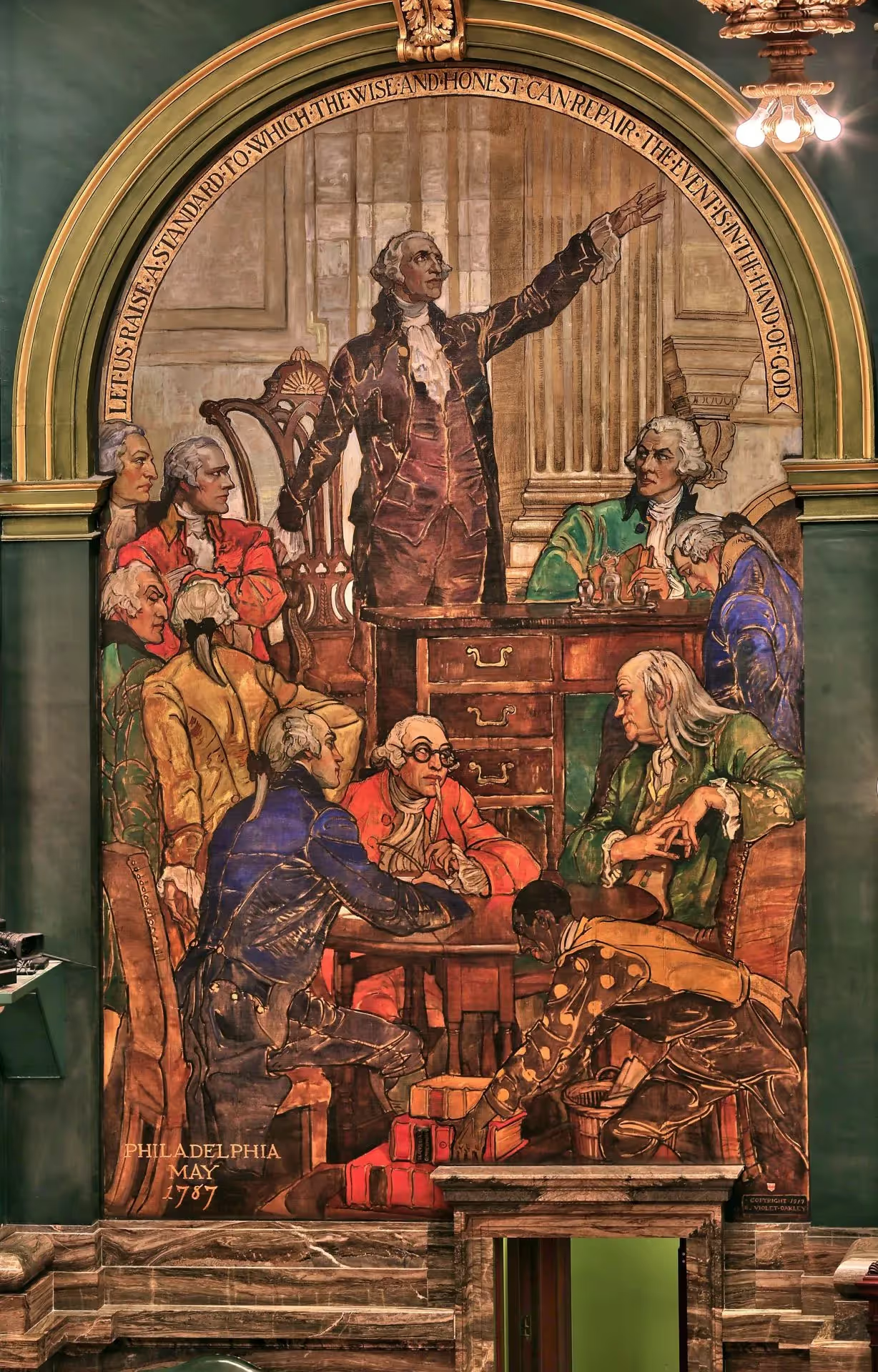
George Washington at the Constitutional Convention, from the mural series The Creation and Preservation of the Union, 1911-20, by Violet Oakley, Senate Chamber, Pennsylvania State Capitol. Photograph by Darryl Moran
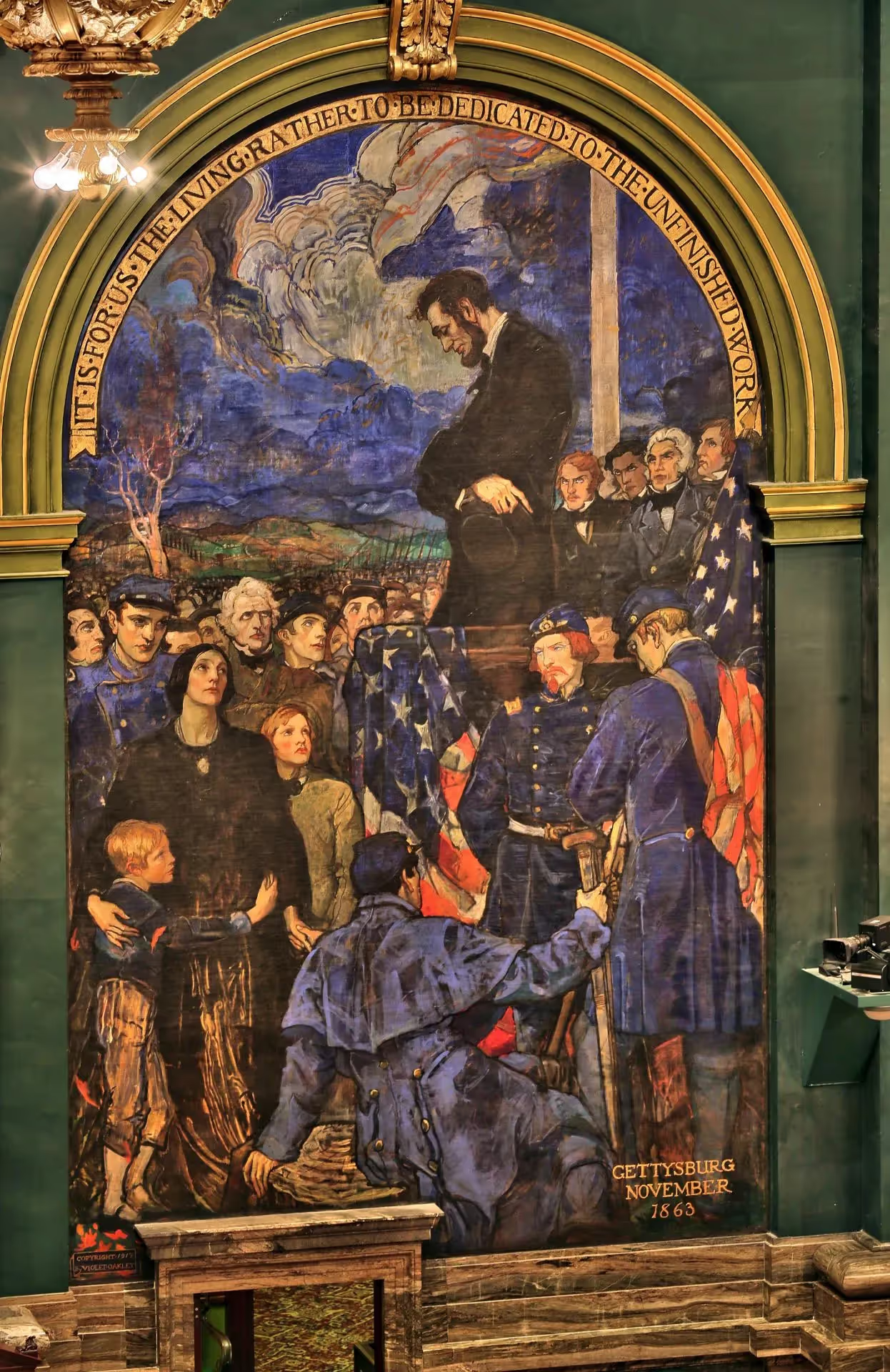
Lincoln at Gettysburg, 1863, from the mural series The Creation and Preservation of the Union, 1911-20, by Violet Oakley, Senate Chamber, Pennsylvania State Capitol. Photograph by Darryl Moran

Senate Chamber Panel 6: Study for Abraham Lincoln in profile, c. 1916, from the mural series The Creation and Preservation of the Union, 1911-20, by Violet Oakley (Courtesy of the State Museum of Pennsylvania, Pennsylvania Historical and Museum Commission)

Senate Chamber Panel 6: Study of soldier in cap looking down, 1916, from the mural series The Creation and Preservation of the Union, 1911-20, by Violet Oakley (Courtesy of the State Museum of Pennsylvania, Pennsylvania Historical and Museum Commission)

The Armies of the Earth Striving to Take the Kingdom of Unity by Force, from the mural series The Creation and Preservation of the Union, 1911-20, by Violet Oakley, Senate Chamber, Pennsylvania State Capitol. Photograph by Darryl Moran

Senate Chamber Panel 7: Study of soldier, 1916, from the mural series The Creation and Preservation of the Union, 1911-20, by Violet Oakley (Courtesy of the State Museum of Pennsylvania, Pennsylvania Historical and Museum Commission)
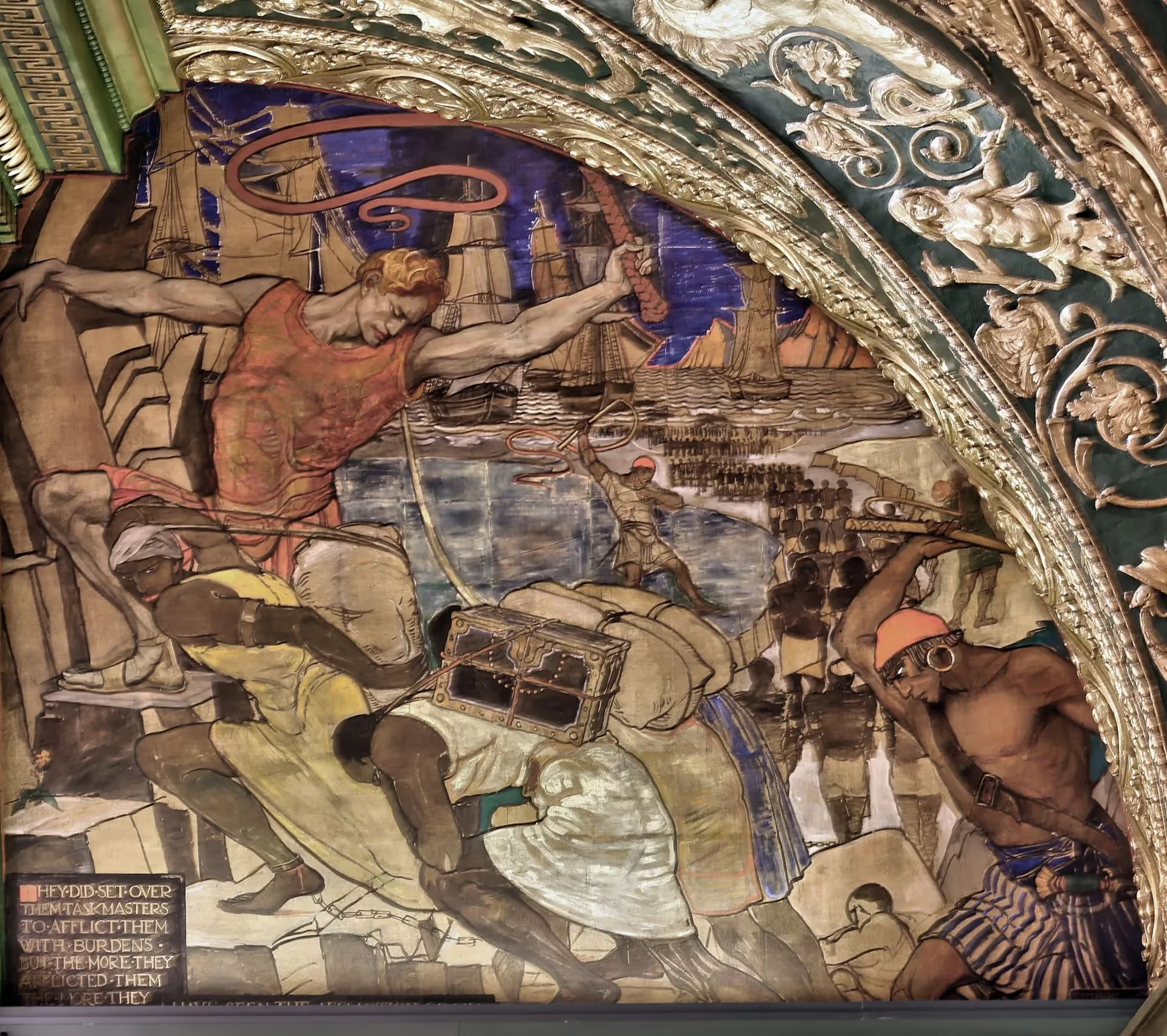
The Slaves of the Earth Driven Forward and Upward by Their Slave-Driver, from the mural series The Creation and Preservation of the Union, 1911-20, by Violet Oakley, Senate Chamber, Pennsylvania State Capitol. Photograph by Darryl Moran

Senate Chamber Panel 8: Study for Slave-drivers, 1916, from the mural series The Creation and Preservation of the Union, 1911-20, by Violet Oakley (Courtesy of the State Museum of Pennsylvania, Pennsylvania Historical and Museum Commission)

Unity, from the mural series The Creation and Preservation of the Union, 1911-20, by Violet Oakley, Senate Chamber, Pennsylvania State Capitol. Photograph by Darryl Moran

Senate Chamber Panel 9. Inter-racial group (right side), c. 1916, from the mural series The Creation and Preservation of the Union, 1911-20, by Violet Oakley (Courtesy of the State Museum of Pennsylvania, Pennsylvania Historical and Museum Commission)

Senate Chamber Panel 9: “International Understanding and Unity” (Inscribed "And he shewed me a pure river of the water of life…," c. 1911 (Courtesy of the State Museum of Pennsylvania, Pennsylvania Historical and Museum Commission)

Senate Chamber [Study for North Wall of Senate Chamber], c. 1916, from the mural series The Creation and Preservation of the Union, 1911-20, by Violet Oakley (Courtesy of the State Museum of Pennsylvania, Pennsylvania Historical and Museum Commission)

Senate Chamber Panel 9: Composition study for “Unity” figure with inscription, c. 1916, from the mural series The Creation and Preservation of the Union, 1911-20, by Violet Oakley (Courtesy of the State Museum of Pennsylvania, Pennsylvania Historical and Museum Commission)
Historical Images

Violet Oakley at work on Unity panel, Senate Chamber, date unknown (Historical Society of Pennsylvania) Photographer unknown

Senate Chamber panels in Violet Oakley's studio, date unknown (Violet Oakley papers, 1841-1981. Archives of American Art, Smithsonian Institution) Photographer unknown

Violet Oakley in front of her Unity mural in the Senate Chamber at the Pennsylvania State Capitol, c. 1905 (Violet Oakley papers, 1841-1981. Archives of American Art, Smithsonian Institution) Photographer unknown

"A Woman Chosen to Complete the Abbey Paintings," New York Times, December 3, 1911

Poster for lecture on mural painting, February 18, 1920, T-Square Club, designed by Violet Oakley (Courtesy of Patricia Likos Ricci)

Portrait of Joseph M. Huston, date unknown, by Frederick Gutekunst (Brian Hunt & Pennsylvania Capitol Preservation Committee)
Related Works in Woodmere’s Collection

The Holy Experiment: A Message to the World from Pennsylvania [Philadelphia: Cogslea Studio Publications, 1922], by Violet Oakley (Woodmere Art Museum: Gift of Mr. Charles N. H. Dodge & Mrs. Pierre G. Fraley, 1975)

The Holy Experiment, Our Heritage from William Penn, 1644-1944 [Philadelphia: Cogslea Studio, 1950], by Violet Oakley (Woodmere Art Museum)

Study for "The Constitutional Convention, Philadelphia, 1787" mural, Cuyahoga County Courthouse, Cleveland, Ohio, c. 1911-15, by Violet Oakley (Woodmere Art Museum: Gift of the Pennsylvania Academy of the Fine Arts, 2015)

Study for The Fourth Liberty Loan poster, c. 1935, by Violet Oakley (Woodmere Art Museum: Gift of the Pennsylvania Academy of the Fine Arts, 2015)

Study for "Peace and Truth" banner, 1919, by Violet Oakley (Woodmere Art Museum: Gift of the Pennsylvania Academy of the Fine Arts, 2015)

Study for "Peace and Truth" banner, 1919, by Violet Oakley (Woodmere Art Museum: Gift of the Pennsylvania Academy of the Fine Arts, 2015)

Study for "Il Convito," The Banquet: Edith Emerson as the page "Giovanni" [with Mary Nixon and Daniel Buckley at right in outline], Celebrating Completion of Seven Panels for the Senate Chamber mural series, the State Capitol, Harrisburg, date unknown, by Violet Oakley (Woodmere Art Museum: Gift of the Pennsylvania Academy of the Fine Arts, 2015)

Study for "Il Convito," The Banquet [Edith Emerson and Alex de Tarnowski in outline at left, and Mary Nixon and Daniel Buckley at right], Celebrating Completion of Seven Panels for the Senate Chamber mural series, the State Capitol, Harrisburg, date unknown, by Violet Oakley (Woodmere Art Museum: Gift of the Pennsylvania Academy of the Fine Arts, 2015)

Study for "Peace and Truth" banner, 1919, by Violet Oakley (Woodmere Art Museum: Gift of the Pennsylvania Academy of the Fine Arts, 2015)

Study for "Peace and Truth" banner, 1919, by Violet Oakley (Woodmere Art Museum: Gift of the Pennsylvania Academy of the Fine Arts, 2015)

Portrait of Jane Addams, c. 1908, by Eva Watson-Schütze (1867–1935) (Woodmere Art Museum: Gift of J. Randall Plummer and Harvey S. Shipley Miller, 2005)
More from
The State